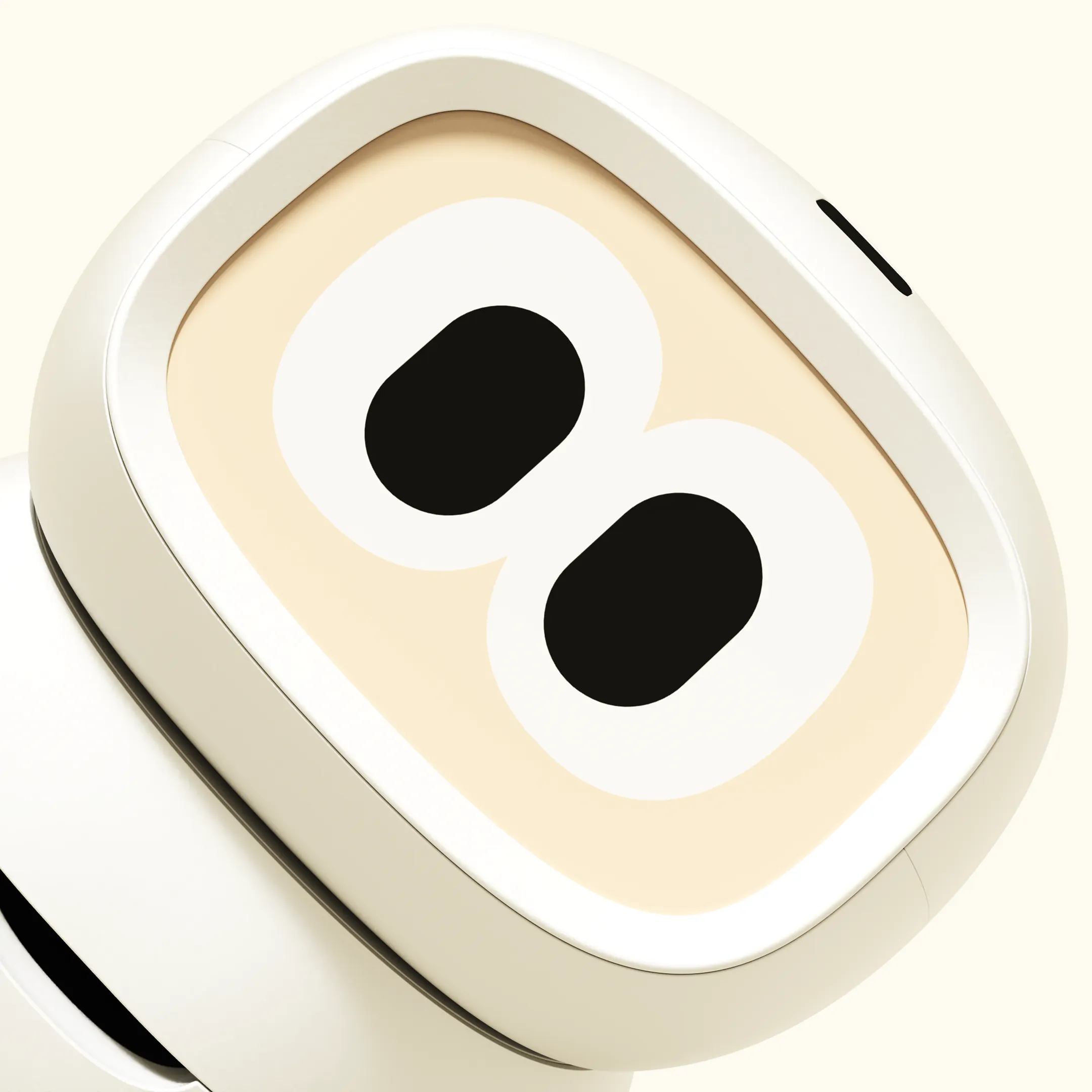
Product Introduction
- Definition: Rhem is an AI-powered, tabletop companion robot designed for in-home elder care and family wellness monitoring. It is a hardware and software ecosystem that combines biometric sensors, conversational AI, and autonomous task-completion agents to provide non-intrusive support for aging adults.
- Core Value Proposition: Rhem Labs exists to solve the visibility problem in aging at home. Its primary function is to detect subtle, early changes in an older adult's health and daily patterns through continuous, passive monitoring and proactive assistance, thereby helping families prevent minor issues from escalating into serious health crises and extending the period of safe, independent living.
Main Features
- Multi-Parameter Biometric Monitoring: Rhem features an integrated optical sensor that measures key vital signs—blood pressure, heart rate, and blood oxygen saturation (SpO₂)—through a simple finger placement. All readings are automatically timestamped and logged into a historical health dashboard, creating a longitudinal data set for trend analysis rather than isolated data points.
- Conversational Pattern Analysis & Proactive Engagement: Using natural language processing (NLP), Rhem engages in daily voice conversations to provide companionship and cognitive stimulation. Crucially, it analyzes these dialogues over time to identify changes in speech patterns, topic recurrence, and memory cues. It can also initiate conversations based on pre-set routines, serving as a proactive check-in tool.
- Autonomous AI Agent System for Task Completion: Rhem's core technical differentiator is its suite of AI agents that execute real-world tasks. A browser agent can autonomously navigate websites to perform actions like refilling prescriptions or booking appointments. A voice agent can make outbound phone calls to businesses (e.g., pharmacies, restaurants) to coordinate details. This moves beyond simple voice assistants (like Alexa) into the realm of actionable task automation.
- Context-Aware Reminders & Family Alert System: Reminders are not one-time notifications. Rhem follows up if a task is not acknowledged, can call the user if they are away from the device, and escalates unresolved items to designated family members via the companion app. It also listens for specific verbal help phrases (e.g., "Rhem, help me!") to trigger alerts to the family network.
- Integrated Fall Detection (via Halo Sensor): Rhem offers an optional, camera-free fall detection system called Halo. This separate sensor uses non-visual technology (likely radar or advanced motion/audio analysis) to detect potential falls and integrates the alerts directly into the Rhem family app, providing an estimated accuracy and time elapsed since the event.
- Unified Family Communication Hub: The Rhem device and app consolidate family interaction through one-tap video/voice calls, voice messages, and a shared care dashboard. This gives remote family members a window into their loved one's wellness metrics, daily activity summaries (mood, sleep, activity), and a log of tasks Rhem has completed.
Problems Solved
- Pain Point: "Digital Isolation and Task Complexity" for Seniors. Older adults often struggle with complex smartphone interfaces, confusing website menus, and automated phone systems. This creates barriers to managing essential tasks (healthcare, shopping) and increases reliance on family.
- Pain Point: "Reactive, Crisis-Driven Care" for Families. Family caregivers typically operate in a reactive mode, only learning of problems during weekly calls or after a fall has occurred. There is a lack of continuous, data-driven insight into subtle declines in health or cognition.
- Target Audience: Primary: Aging adults (60+) who wish to maintain independence but may face mild cognitive or physical challenges. Secondary: Their adult children (often in the "sandwich generation") who are remote caregivers seeking peace of mind and tools for proactive support.
- Use Cases: Early Health Deterioration Detection: Tracking a gradual increase in resting heart rate or a change in sleep patterns. Medication & Appointment Management: Automating prescription refills and doctor's office bookings via voice command. Safety Net for Falls: Providing an automatic, wearable-free alert system for falls when the user is alone. Reducing Caregiver Anxiety: Giving family members a dashboard to see daily wellness scores and completed tasks, replacing uncertainty with structured information.
Unique Advantages
Strengths & Limitations (Pros & Cons):
- Pros:
- Action-Oriented AI: Goes beyond Q&A to actually complete tasks (calls, web forms), a significant leap over standard smart speakers.
- Multi-Modal Data Synthesis: Combines objective biometrics with subjective conversational analysis, providing a more holistic view of wellness than single-point solutions.
- Proactive & Reactive Design: Initiates check-ins and responds to emergencies, covering both scheduled and unexpected care needs.
- Privacy-Conscious Fall Detection: Halo sensor offers fall detection without a camera, addressing a major privacy concern for in-home monitoring.
- Cons & Limitations:
- Not a Medical Device: The biometric sensors are for wellness tracking and trend observation; they are not FDA-cleared for diagnostic use. Accuracy for medical decision-making is not guaranteed.
- Emergency Response Limitation: The help phrase alert notifies family, not 911. The product explicitly states not to rely on it for emergencies, which is a critical functional gap compared to traditional medical alert systems.
- Dependency on Connectivity & AI Reliability: All core functions require stable Wi-Fi. Task completion is dependent on the AI agents' ability to correctly parse complex, real-world websites and phone systems, which may fail in edge cases.
- Cost & Ecosystem Lock-in: As a dedicated hardware device with a subscription-like service model (implied by ongoing AI/connectivity services), it represents a higher upfront and ongoing cost than app-based solutions.
- Pros:
Key Alternatives & Differentiation:
- vs. Medical Alert Systems (e.g., LifeAlert, Medical Guardian): These are superior for immediate, life-threatening emergencies with direct 911 dispatch. However, they are purely reactive, wearable pendants with no wellness tracking, companionship, or task automation. Rhem is a proactive, holistic life-enhancement platform but is not a replacement for emergency response services.
- vs. Smart Displays & Voice Assistants (e.g., Amazon Echo Show, Google Nest Hub): These are far cheaper and excel at smart home control, entertainment, and basic timers/reminders. They lack integrated health sensors, deep conversational analysis, and most importantly, the ability to autonomously execute tasks on the web or via phone. They are general-purpose devices; Rhem is a specialized care platform.
- vs. Remote Patient Monitoring (RPM) Platforms: These are clinician-focused, FDA-regulated systems for managing specific chronic conditions (e.g., glucose, weight, blood pressure). They provide data to care teams, not families, and lack companionship, task automation, and fall detection. Rhem is a consumer-family focused wellness and assistance tool.
Frequently Asked Questions (FAQ)
- Is Rhem a medical device? No, Rhem is a wellness and assistance robot. Its biometric sensors are for general health tracking and trend observation. It is not FDA-cleared for diagnosis or treatment of medical conditions. Always consult a healthcare professional for medical advice.
- Can Rhem call 911 in an emergency? No, Rhem cannot directly contact emergency services. Its "help" function sends an alert to pre-designated family members via the app. For any life-threatening situation, you must call 911 directly. Rhem is designed for early intervention and daily assistance, not emergency response.
- How does Rhem's fall detection work without a camera? Rhem uses a separate device called the Halo sensor, which employs non-camera technology (such as radar or advanced audio processing) to detect the motion and impact patterns associated with a fall. This design prioritizes user privacy while providing a safety alert feature.
- What is the difference between Rhem and a smart speaker like Alexa? While both use voice, Rhem is purpose-built for elder care. Key differences: Rhem has integrated health sensors, analyzes conversation patterns for cognitive cues, and its AI agents can actually perform tasks like navigating pharmacy websites or calling a restaurant to book a table—actions that require multi-step reasoning beyond Alexa's simple skill-based commands.
- Does Rhem require a monthly subscription fee? Based on industry standards for AI-powered hardware with continuous service (updates, cloud processing, cellular backup for Halo), it is highly likely Rhem requires a monthly or annual software subscription fee to maintain all its smart features, though the specific pricing model should be confirmed on their official website.