
Product Introduction
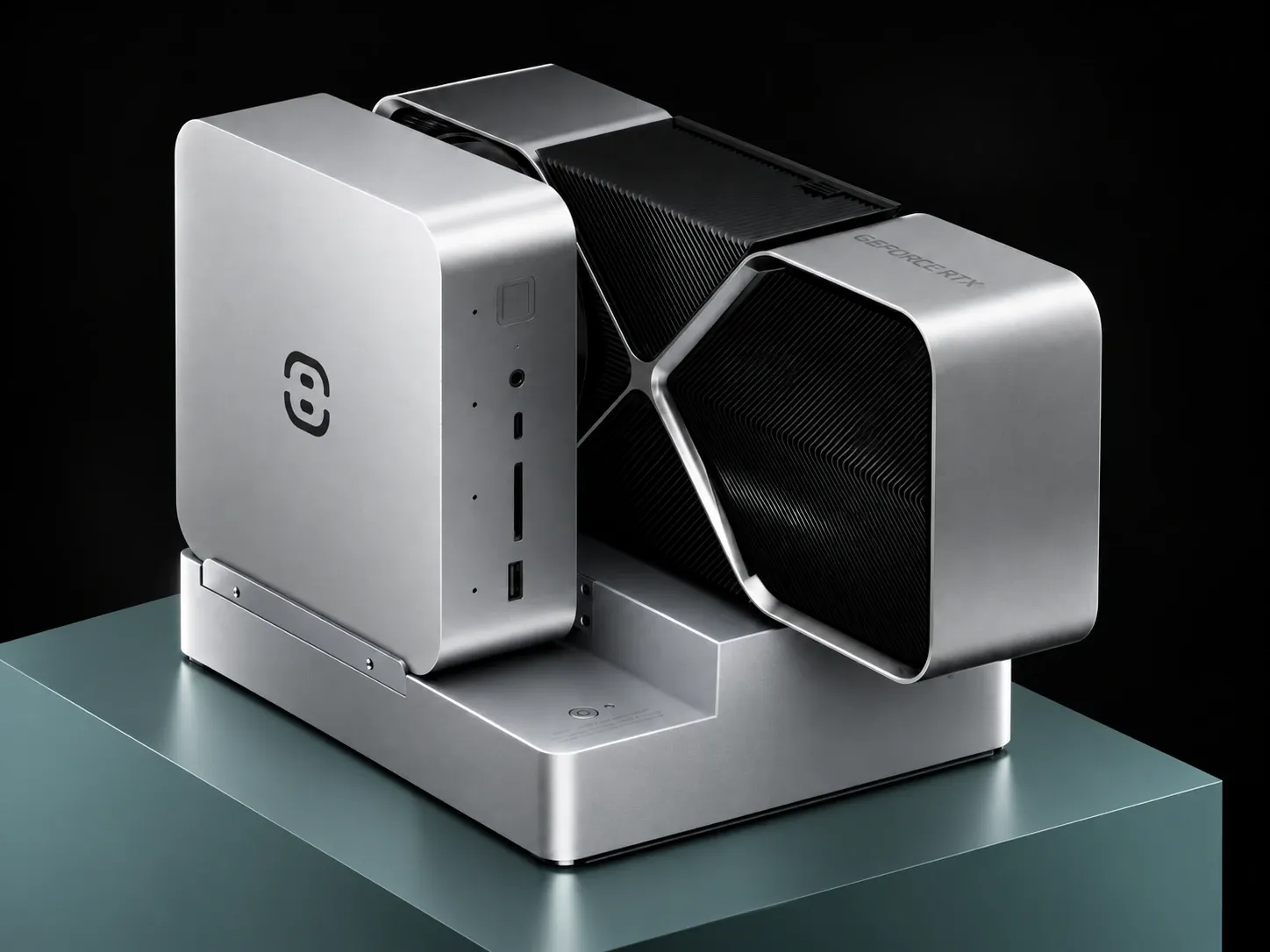
- Definition: The Own 1 is a fanless, personal AI computer designed for local, private artificial intelligence execution. It is a specialized hardware and software system that runs open-weight large language models (LLMs), AI agents, and a persistent personal intelligence profile directly on-device.
- Core Value Proposition: Own 1 exists to provide Scalable Private Intelligence (SPI), enabling users to own and control their AI data, memory, and workflows. Its primary value is eliminating dependency on subscription-based, cloud-only AI services by offering a powerful, silent desktop computer where AI runs locally with no per-token costs or required API subscriptions, ensuring data privacy and operational independence.
Main Features
- Local AI Execution & Hardware: The device is built around an Intel Core Ultra 9 285K processor with integrated Intel Arc graphics, delivering up to 99 TOPS of AI performance. It is configured with up to 128GB of unified memory and up to 8TB of user-replaceable NVMe storage, specifically sized to host and run multiple quantized LLMs (like Qwen 2.5 32B or Llama 3.1 70B) and up to eight concurrent AI agents locally without cloud latency or data transmission.
- OwnXOS (AI-Native Operating System): This is a lightweight, open operating system based on NixOS, featuring TPM 2.0 security, Btrfs snapshots, and atomic updates. Its core function is to act as a unified management layer for AI resources, handling model deployment, agent permissions, system-wide memory context, and automated spending policies for the integrated x402 USDC wallet. It provides one-command rollback for system stability.
- Nexy & The Agent Orchestration Framework: Nexy is a persistent, local "SuperAgent" that ships with Own 1. It orchestrates a user's team of specialized AI agents, manages workflows across applications, and controls all spending and installation requests based on user-defined rules. This transforms the device from a simple AI chat interface into an automated, context-aware co-worker that operates within strict privacy and budgetary guardrails.
Problems Solved
- Pain Point: It solves the data privacy and vendor lock-in inherent in cloud-based AI platforms (e.g., ChatGPT, Claude), where user data, context, and preferences are stored on external servers under third-party control, creating security risks and making the user's accumulated intelligence non-portable.
- Target Audience: The primary users are AI-power users, developers, researchers, founders, and privacy-conscious professionals (e.g., lawyers, writers, analysts) who regularly use AI for sensitive tasks involving proprietary code, business plans, financial documents, or creative work and require persistent, private context.
- Use Cases: Essential for offline AI research and development, confidential document analysis, long-term creative writing projects with persistent memory, automated coding assistance with local codebase context, and running proprietary AI agents that must not expose data to external APIs.
Unique Advantages
Strengths & Limitations (Pros & Cons):
- Pros: Unmatched data sovereignty and privacy with local execution; predictable, one-time cost with no hidden API fees; persistent and portable intelligence profile that is device-independent; open-weight model support for transparency and customization; granular agent and spending control via Nexy and x402 wallet.
- Cons: High upfront cost (starting at $3,899); limited to open-weight models that fit in local RAM (128GB max), excluding the largest proprietary models; scheduled shipping not until October 2026; requires technical comfort for advanced configuration; performance for massive models relies on optional, paid OwnXCloud routing.
Key Alternatives & Differentiation:
- Mac Studio with MLX: A powerful general-purpose computer with excellent AI inference via Apple's MLX framework. Differentiation: Own 1 is purpose-built with an AI-native OS (OwnXOS) integrating agent orchestration (Nexy), privacy controls, and a unified intelligence layer, which macOS lacks. Own 1 also offers user-upgradeable storage and explicit external GPU support.
- Cloud AI API Subscriptions (OpenAI, Anthropic): The standard pay-per-token model for accessing state-of-the-art models. Differentiation: Own 1 provides zero ongoing cost for local use and keeps all data private. It trades access to the very latest frontier models for ownership, privacy, and cost predictability.
- Building a Custom AI PC: Assembling a high-memory PC with a powerful GPU. Differentiation: Own 1 offers a vertically integrated software stack (OwnXOS, Nexy, pre-configured models) that is optimized, supported, and designed as a cohesive "personal intelligence" system, saving significant setup and integration time.
Frequently Asked Questions (FAQ)
- Can Own 1 run completely offline? Yes, Own 1 operates fully offline. Installed local LLMs, the Nexy agent, private memory, and all local files and workflows function without an internet connection. Connectivity is only required for software updates, downloading new models, or intentionally routing work to the optional OwnXCloud.
- What is the real-world performance for running local LLMs? Performance depends on the specific model, its quantization level, and context length. With 128GB RAM, Own 1 can run two mid-sized 70B parameter models (like Llama 3.1 70B in 4-bit quantization) concurrently alongside other agents. For the largest open-weight models (e.g., 400B+ parameters), local execution is not possible; these would require using the optional OwnXCloud compute.
- How does the x402 payment system for agents work? The x402 system integrates a USDC wallet into OwnXOS. Users can set spending budgets and rules (e.g., "Agent X can spend up to $5/month on translation APIs"). When an agent needs to use a paid external service or API, it requests payment against these pre-approved rules, generating an on-chain audit receipt. No spending occurs without user-configured policies.
- Is Own 1 suitable for a small team or household? Yes, OwnXOS supports up to ten separate user seats with individual logins, conversations, memory, and permissions, with up to five concurrent browser sessions. This makes it viable for a small team or family to share the hardware while maintaining isolated, private AI workspaces.
- What happens if a software update breaks something? OwnXOS uses NixOS generations and Btrfs snapshots. If an update causes issues, you can reboot and select the previous, working system generation from the boot menu, performing a one-command rollback to a known stable state without losing data.


