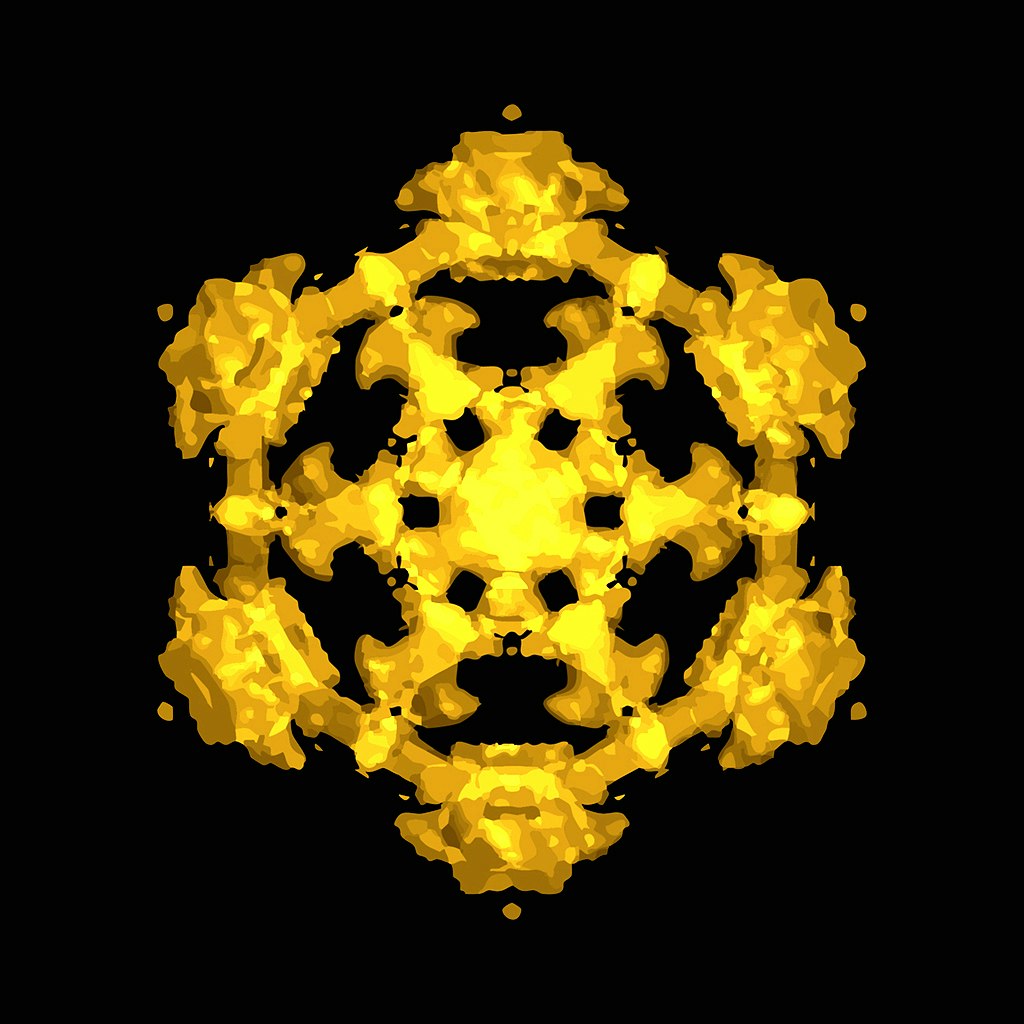
Product Introduction
- Definition: Imajourn is a premium physics-based simulation application (iOS/macOS) categorized as an interactive wave simulator and cymatics sandbox. It computationally models the behavior of waves (acoustic, fluid, structural) and their interactions with geometry and particles in real-time.
- Core Value Proposition: Imajourn exists to make complex wave physics and sound phenomena visually tangible and interactively explorable. It provides an intuitive, real-time sandbox for visualizing Chladni patterns, cymatics, wave interference, particle dynamics, and audio-reactive systems, serving education, artistic creation, and meditation.
Main Features
- Real-Time Wave Simulation Engine: Imajourn employs advanced numerical solvers (potentially finite difference or spectral methods) to simulate wave propagation, interference, and damping on 2D surfaces. Users manipulate wave sources, frequency, amplitude, and boundary conditions, observing emergent patterns like standing waves and nodal lines instantly. This core technology drives the visualizations.
- Chladni Patterns & Cymatics Generator: The app accurately renders Chladni figures by simulating how resonant frequencies cause particles (e.g., sand) to settle along nodal lines on a vibrating plate. Users adjust frequency, plate shape (square, circular, custom), and damping to visualize distinct modal patterns, directly linking sound vibration to geometric form.
- Audio-Reactive Visualization System: Imajourn integrates real-time Fast Fourier Transform (FFT) analysis of microphone input or internal audio. This data modulates simulation parameters (e.g., wave amplitude based on bass frequencies, particle velocity linked to treble), creating dynamic, sound-driven visual performances and cymatics experiments.
- 3D Particle System with Physics: Beyond surface patterns, Imajourn simulates thousands of individual 3D particles influenced by wave forces, gravity, viscosity, and collisions (likely using particle system libraries optimized with GPU acceleration like Metal). Particles flow, cluster, and exhibit emergent behavior based on the underlying wavefield and audio input.
- Curated Presets & Intuitive UI: The app offers numerous pre-configured simulations showcasing key phenomena (e.g., specific Chladni modes, harmonic interference). Its touch/UI-friendly interface allows easy parameter adjustment (sliders, multi-touch gestures) and saving/loading of custom setups, lowering the barrier to complex physics exploration.
Problems Solved
- Pain Point: Abstract wave physics concepts (interference, resonance, modal patterns) are notoriously difficult to grasp through equations or static images alone. Imajourn solves this by providing immediate, interactive visual feedback, transforming abstract principles into concrete, manipulable experiences.
- Target Audience:
- Physics Educators & Students: For demonstrating wave mechanics, acoustics, and resonance phenomena in classrooms or self-study.
- Sound Therapists & Meditators: Exploring the visual representation of sound frequencies for therapeutic or mindfulness practices.
- Digital Artists & VJs: Generating unique, algorithmically driven visuals and audio-reactive art installations.
- Acoustic Engineers & Researchers: Providing an intuitive tool for preliminary exploration of vibration patterns on different geometries.
- Use Cases:
- Visualizing how changing frequency alters nodal patterns on a Chladni plate during a physics lecture.
- Creating live, sound-reactive visual performances for music events.
- Using harmonic wave patterns and flowing particles as a focus tool for meditation.
- Experimenting with wave interference shapes for digital art inspiration.
- Quickly testing how different plate shapes affect resonant modes.
Unique Advantages
- Differentiation: Unlike static Chladni plate images, basic wave simulators, or purely artistic visualizers, Imajourn uniquely combines real-time physics simulation, accurate Chladni pattern generation, complex 3D particle systems, and robust audio reactivity into a single, user-friendly sandbox. Competitors often focus on only one or two of these aspects.
- Key Innovation: Imajourn's core innovation lies in its unified simulation engine that seamlessly integrates multiple physical domains (wave mechanics, particle dynamics, acoustics) with high performance (likely leveraging Apple's Metal API for GPU acceleration). This enables complex, real-time interactions between sound, waves, geometry, and particles that feel cohesive and visually stunning, pushing beyond simple pre-rendered effects.
Frequently Asked Questions (FAQ)
- What are Chladni patterns and how does Imajourn simulate them? Chladni patterns are nodal figures formed by particles on a vibrating surface at resonant frequencies. Imajourn simulates this by calculating the standing wave modes on a virtual plate and accurately placing simulated particles along the resulting nodal lines where vibration is minimal.
- Can Imajourn use my own music for audio-reactive visuals? Yes, Imajourn's audio reactivity feature can analyze sound input from your device's microphone or internal audio playback, allowing you to use your own music to drive the wave simulations, particle movements, and Chladni pattern formations in real-time.
- What devices and operating systems support the Imajourn app? Imajourn is a native application available on the Apple App Store, requiring iOS 16.0 or later for iPhone/iPad or macOS 13.0 (Ventura) or later for Mac. It leverages Apple Silicon (M1/M2/M3) or compatible Intel processors for optimal performance.
- Is Imajourn suitable for educational use in schools? Absolutely. Imajourn is an excellent educational physics simulation tool for demonstrating wave interference, resonance, cymatics, and particle physics. Its intuitive interface and presets make complex concepts accessible for high school and university-level STEM education.
- Does Imajourn require an internet connection to function? No, once downloaded from the App Store, Imajourn's core simulation features, including wave physics, Chladni patterns, particle systems, and preset loading, work fully offline. Internet access is only needed for initial download, potential updates, or accessing cloud-saved presets if implemented.