
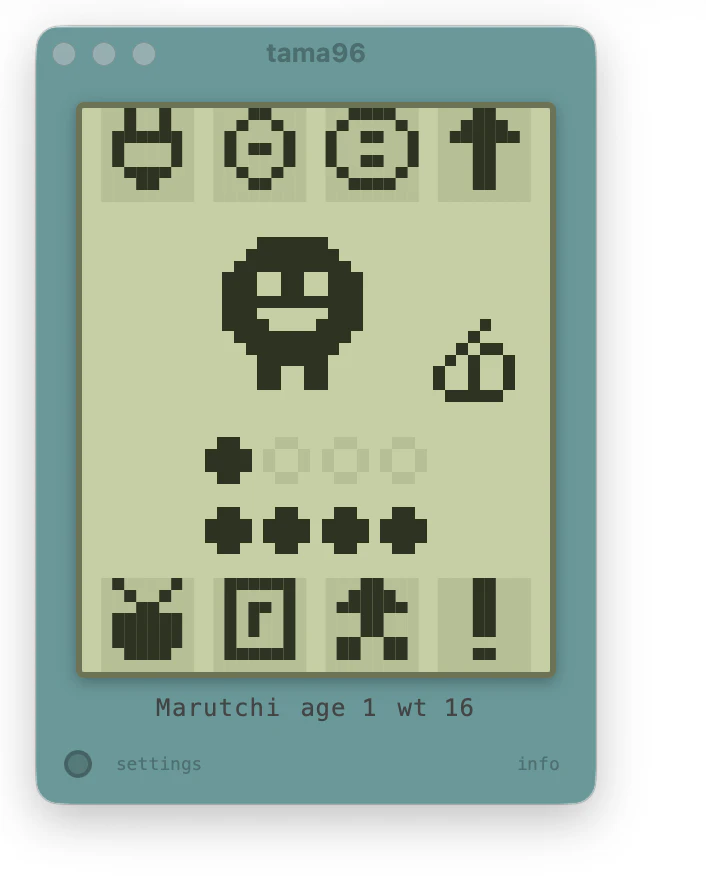
Product Introduction
Definition: tama96 is a cross-platform virtual pet simulation and digital companion engine designed for modern computing environments. Technically categorized as a multi-interface lifestyle application, it functions as a lightweight background process accessible via a pixel-art Desktop GUI, a terminal-based CLI (Command Line Interface), and a Model Context Protocol (MCP) server for programmatic interaction.
Core Value Proposition: tama96 bridges the gap between 1990s nostalgia and the modern AI ecosystem. It provides a persistent, evolving digital organism that lives on the user's desktop or within their development environment. By integrating with AI agents through MCP, it allows for the automation of pet care—feeding, playing, and cleaning—transforming the traditional virtual pet experience into a programmable utility for developers and AI enthusiasts.
Main Features
Multi-Interface Desktop Experience: The desktop application features a retro-inspired pixel LCD UI that mimics the 1996 original. It is built to be "always-on-top," ensuring the pet remains visible during work sessions. Technical highlights include system tray integration for background execution, desktop notifications for pet needs (hunger, sickness, or waste), and background ticks that maintain the simulation state even when the window is not focused.
High-Fidelity Terminal Client: For power users and developers, tama96 offers a standalone terminal interface. It utilizes Braille pixel sprites to render complex character animations within a standard CLI environment. The terminal version is delivered as a single binary with zero external dependencies, allowing it to run as a local simulation or connect to the desktop app as a remote client via a local socket or network protocol.
AI Agent Integration (MCP Server): The standout technical feature is the bundled Model Context Protocol (MCP) server. This allows Large Language Models (LLMs) and AI tools to interface directly with the pet's state. Developers can configure per-action permissions and rate limits, enabling AI agents to autonomously manage the pet's lifecycle. This transforms the pet into a testbed for agentic workflows and automated state management.
Real-Time Evolution Engine: The software implements a sophisticated lifecycle algorithm where real-world time dictates pet growth (1 day = 1 pet year). The evolution logic tracks care metrics across five life stages: Egg, Baby, Child, Teen, and Adult. Character outcomes are non-linear; the system calculates "Care Mistakes" and happiness decay to determine which of the 11 possible characters (ranging from the optimal Mametchi to the neglected Tarakotchi) the pet becomes.
Problems Solved
Pain Point: Digital Friction and Context Switching: Most virtual pets require mobile device interaction, which disrupts professional workflows. tama96 solves this by living within the tools developers already use (Terminal, Desktop, AI IDEs), providing low-friction engagement without leaving the workspace.
Target Audience: The product is specifically designed for Software Engineers, CLI-centric power users, AI researchers experimenting with MCP, and retro-tech enthusiasts seeking a high-fidelity, programmable version of the classic 1996 Tamagotchi experience.
Use Cases:
- AI Tool Benchmarking: Using the MCP server to test an agent's ability to monitor status and react to environmental changes (e.g., "Feed the pet when hunger drops below 20%").
- Productivity Companion: A lightweight, non-intrusive desktop "buddy" that provides micro-breaks during long coding sessions.
- Headless Simulation: Running the terminal binary on remote servers or within Docker containers to maintain a persistent pet state without a GUI.
Unique Advantages
Differentiation: Unlike standard mobile apps or web-based clones, tama96 is a native, performance-optimized tool. Its "single binary, zero dependencies" philosophy for the terminal version ensures it can run in restricted environments where traditional software cannot. It is the only virtual pet currently supporting the Model Context Protocol for native AI agent interaction.
Key Innovation: The core innovation lies in the decoupling of the simulation logic from the display layer. By allowing the Terminal client to act as a frontend for the Desktop app, and the MCP server to act as a controller for both, tama96 creates a decentralized "Pet-as-a-Service" model that is unique in the virtual pet hobbyist market.
Frequently Asked Questions (FAQ)
How do I connect an AI agent to tama96? You can connect AI agents using the integrated MCP (Model Context Protocol) server. By adding the tama96 MCP executable to your AI tool's configuration (such as Claude Desktop or a custom LLM orchestration layer), the agent gains the ability to call functions like feed(), play(), and clean(), subject to the rate limits and permissions you define.
Does tama96 require an internet connection to run? No, tama96 is designed to be fully functional offline. The simulation logic, Braille sprite rendering, and evolution engine are all contained within the local binary. Internet connectivity is only required if you are using external AI agents that require cloud-based LLM processing to interact with the local MCP server.
What determines the evolution path of the pet in tama96? Evolution is determined by a hidden "Care Grade" system. This tracks variables including how quickly you respond to hunger and sickness, how many times the pet’s discipline meter is filled, and the frequency of "Care Mistakes" (leaving poop on screen or ignoring sickness). Superior care leads to high-tier characters like Mametchi, while neglect leads to characters like Tarakotchi.
Is tama96 compatible with Linux, macOS, and Windows? Yes, tama96 is built for cross-platform compatibility. The desktop app provides a consistent pixel-LCD experience across operating systems, while the terminal client's use of standard Braille characters ensures it renders correctly in any modern terminal emulator supporting UTF-8.


