
Product Introduction
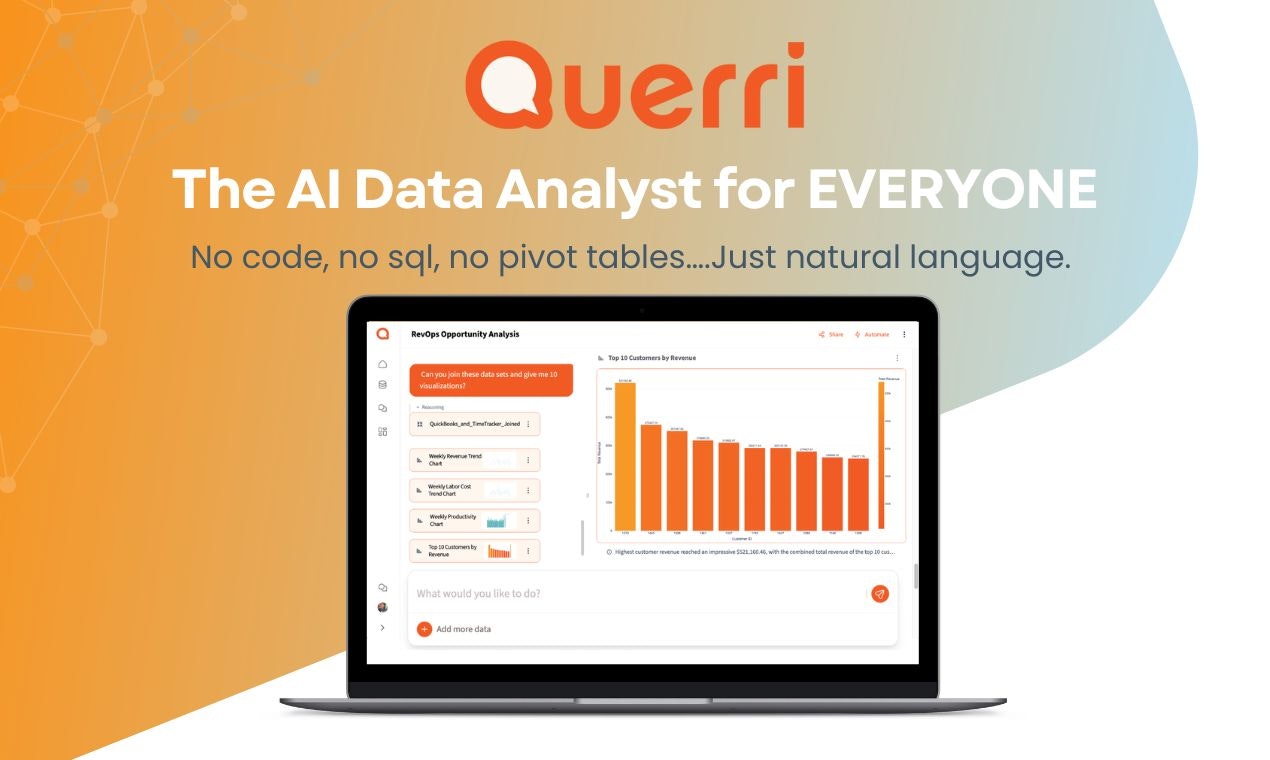
- Querri 2.0 is an AI-powered data analytics platform designed to unify data workflows by enabling teams to connect, clean, analyze, and visualize data in a single interface. It eliminates technical barriers through natural language processing, automated data cleansing, and drag-and-drop dashboard creation. The platform supports cross-functional collaboration with real-time insights and shareable reports.
- The core value of Querri 2.0 lies in democratizing data analysis for non-technical users while maintaining enterprise-grade security. It accelerates decision-making by automating repetitive tasks like data validation, integration, and visualization. Teams can build AI-driven workflows to identify trends, optimize operations, and predict outcomes without coding expertise.
Main Features
- Querri 2.0 provides an AI Data Analyst that interprets natural language queries to generate insights, such as identifying factors affecting customer retention or predicting cash flow trends. The AI handles follow-up questions, explains results, and suggests actionable recommendations. It integrates with structured and unstructured data sources, including spreadsheets, databases, and SaaS tools.
- The platform offers no-code, interactive dashboards with drag-and-drop functionality for real-time data visualization. Users can create custom charts, maps, and graphs, then share them via embedded links or exports. Dashboards update dynamically as underlying data changes, ensuring stakeholders always access the latest information.
- Automated data cleansing tools standardize, deduplicate, and validate datasets using AI trained for analytics workflows. Querri 2.0 detects missing values, outliers, and inconsistencies, then applies predefined or custom rules to rectify errors. This feature reduces manual cleanup time by 75% and ensures reliable inputs for analysis.
Problems Solved
- Querri 2.0 addresses the complexity of data analysis for teams lacking dedicated data scientists or technical resources. Traditional tools require coding skills for tasks like SQL queries or Python scripting, but Querri’s AI abstracts these steps. This reduces dependency on IT departments and accelerates time-to-insight.
- The platform targets operations, finance, logistics, and manufacturing teams in mid-sized to large enterprises, as well as consultants and nonprofits. It is particularly valuable for industries like SaaS, where rapid customer segmentation or churn analysis is critical.
- Typical use cases include optimizing supply chain delays, forecasting inventory demand, analyzing marketing channel ROI, and generating impact reports for stakeholders. For example, manufacturers use Querri 2.0 to correlate production defects with equipment sensor data, reducing downtime by 20%.
Unique Advantages
- Unlike traditional BI tools like Tableau or Power BI, Querri 2.0 combines data preparation, analysis, and visualization in one platform with embedded AI. Competitors often require separate tools for ETL (Extract, Transform, Load) and dashboarding, increasing costs and complexity.
- Innovative features include white-label solutions for agencies to rebrand dashboards and a Trust Center with SOC 2 compliance documentation. The AI’s context-aware follow-up questions mimic human analysts, drilling into anomalies like sudden revenue drops.
- Competitive advantages include prebuilt connectors for logistics APIs (e.g., SAP, Salesforce) and granular access controls for audit trails. Querri 2.0 processes large datasets faster than spreadsheet-based tools, scaling to millions of rows without performance degradation.
Frequently Asked Questions (FAQ)
- How does Querri 2.0 ensure data security? Querri 2.0 uses AES-256 encryption for data at rest and TLS 1.3 for data in transit, with SOC 2 Type II certification. Role-based access controls restrict data visibility, and audit logs track user activity. Enterprises can deploy on-premises or via private cloud.
- Do I need technical skills to use Querri 2.0? No technical expertise is required—the AI interprets plain-language questions like “Which marketing channels drive conversions?” and auto-generates SQL queries. Data cleansing and dashboard creation are fully no-code, with guided tutorials for onboarding.
- Can Querri integrate with legacy systems? Yes, Querri 2.0 supports 50+ prebuilt connectors, including ERP systems (e.g., Oracle, NetSuite), CRMs (e.g., HubSpot), and cloud storage (e.g., AWS S3). Custom APIs can be added via RESTful endpoints, and CSV/Excel uploads are available for ad-hoc analysis.
- What industries benefit most from Querri 2.0? Manufacturing, logistics, and revenue operations teams use it to optimize production lines and supply chains. Nonprofits leverage impact reporting dashboards, while consultants white-label the platform for client analytics.
- How does Querri handle large datasets? The platform uses columnar storage and in-memory processing to analyze datasets exceeding 10 million rows. Queries are optimized through query caching and parallel processing, delivering results in seconds even for complex joins.


