
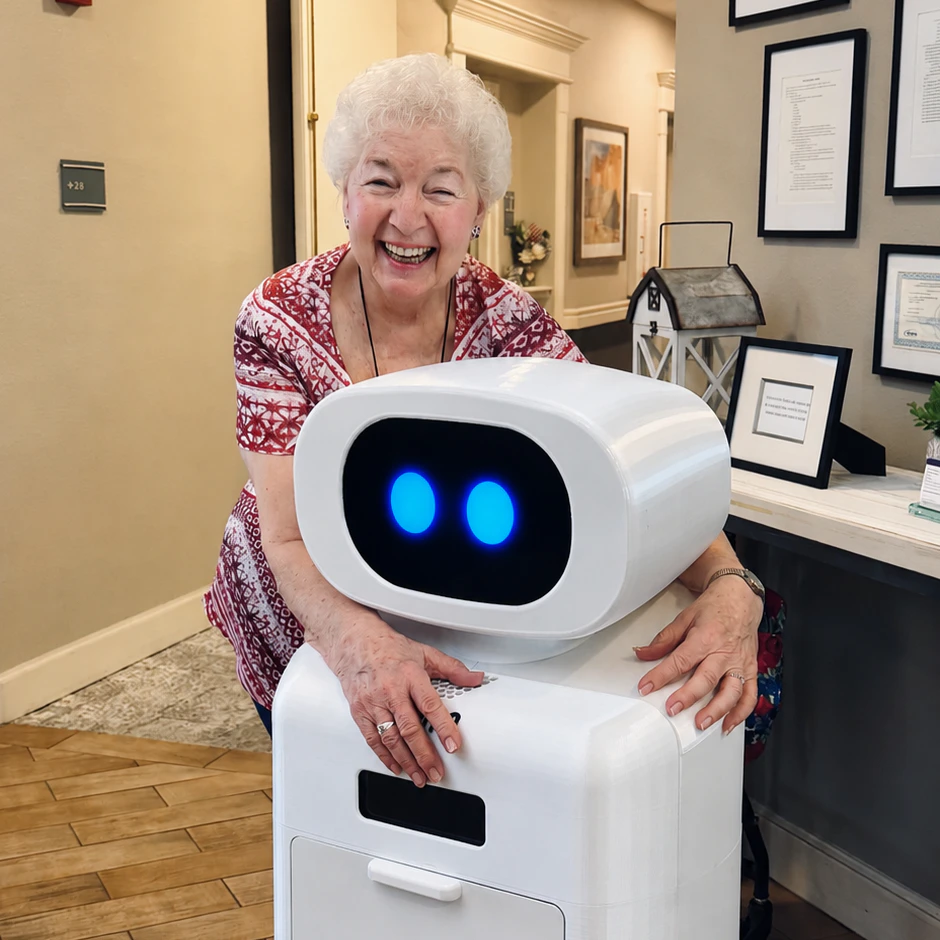
Product Introduction
- Definition: Obotiq Gracie is an autonomous mobile robot (AMR) specifically designed for the senior care and assisted living industry. It is a collaborative robot (cobot) that operates within care facilities to manage a variety of routine, non-clinical tasks.
- Core Value Proposition: The primary purpose of Gracie is to reduce caregiver burnout and enhance care team efficiency. It achieves this by automating repetitive logistics and communication tasks, thereby giving care staff more time for direct, human-centric patient care.
Main Features
- Autonomous Task Execution: Gracie performs a wide range of routine, non-clinical duties autonomously.
- How it works: The robot leverages computer vision and AI-driven navigation to move safely through facility hallways and resident rooms. It is programmed to handle specific, high-volume tasks such as delivering mail, supplies, and non-medical items; performing routine check-ins; relaying simple resident requests; and conducting inter-departmental handoffs.
- Technologies: Core technologies include simultaneous localization and mapping (SLAM) for navigation, natural language processing (NLP) for resident interaction, and cloud-based fleet management for centralized oversight.
- Human-Robot Interaction (HRI) Protocol: Gracie is built to engage with residents and staff in a clear, consistent manner.
- How it works: The robot follows a defined interaction loop: Ask -> Understand -> Act -> Escalate. It can initiate conversations to gather information, interpret resident responses, complete simple actions (like a delivery), and autonomously escalate complex or urgent needs to the appropriate human staff member via the care team's communication system.
- Technologies: This protocol utilizes speech recognition, sentiment analysis, and integrated software with facility communication platforms (e.g., nurse call systems) to ensure proper workflow handoffs.
- Care Workflow Integration: Gracie is designed as a supportive layer within existing care operations, not a replacement.
- How it works: It handles the "routine layer around care," which includes resident check-ins, reminders, and logistical deliveries. This directly addresses the constant, small interruptions that pull staff away from clinical responsibilities and floor presence.
- Technologies: Integration with facility management software and real-time location systems (RTLS) allows Gracie to be dispatched for tasks and to provide status updates to a central dashboard, enhancing operational transparency.
Problems Solved
- Pain Point: Caregiver burnout and cognitive overload caused by an excessive burden of non-clinical, repetitive tasks. Care teams are frequently pulled away from critical clinical duties and resident interactions by routine logistical demands (deliveries, messages, simple requests).
- Target Audience: The primary audience includes Care Facility Administrators, Executive Directors of Assisted Living Communities, Nurse Managers, and Operations Directors in senior care environments (e.g., memory care, independent living, skilled nursing facilities) who are focused on staff retention, operational efficiency, and improving resident satisfaction scores.
- Use Cases:
- Resident Support: A resident presses a call light with a simple request (e.g., "Can I get a newspaper?"). Gracie is dispatched to acknowledge the request, retrieve the item, and deliver it, logging the interaction.
- Logistics & Supply Runs: Gracie autonomously transports dietary supplements from the kitchen to the nursing station, or delivers new linens to a specific wing, freeing staff from these fetch-and-carry tasks.
- Routine Check-ins: Gracie can be programmed to visit specific residents at set times for a friendly verbal check-in, asking if they need anything and reporting any concerns to staff.
- Inter-departmental Communication: Gracie acts as a physical messenger, delivering documents or relaying information between the front desk, activities department, and care wings.
Unique Advantages
- Differentiation: Unlike generic service robots or telepresence units, Gracie is purpose-built for the nuanced, non-clinical workflow of senior care facilities. It focuses on augmenting human care teams by removing operational friction, rather than attempting clinical tasks or merely providing entertainment. It is a specialized logistics and communication cobot for the care environment.
- Key Innovation: The core innovation is the "Ask-Understand-Act-Escalate" autonomous workflow embedded in the robot. This framework allows Gracie to not only complete a predefined task but also intelligently assess situations, engage in basic dialogue, and know the precise moment and method to escalate a need to a human professional, ensuring safety and appropriate care response.
Frequently Asked Questions (FAQ)
What kind of tasks can the Obotiq Gracie robot perform in a care facility? Obotiq Gracie is designed specifically for routine, non-clinical work. Its primary tasks include delivering mail and packages, transporting supplies between departments, conducting routine verbal check-ins with residents, relaying simple resident requests to staff, and handling general inter-facility deliveries. It is not a clinical robot and does not perform medical procedures.
How does Gracie reduce caregiver burnout and improve staff efficiency? Gracie reduces caregiver burnout by automating the high-volume, repetitive logistical tasks and simple resident inquiries that constantly interrupt care teams. By handling these "small, repeated needs," Gracie frees nursing staff and caregivers to remain on the floor, focus on complex clinical tasks, and dedicate more uninterrupted time to direct human interaction and high-quality care.
Is Obotiq Gracie safe and easy for elderly residents to interact with? Yes, safety and ease of interaction are fundamental to its design. Gracie uses advanced sensors and AI navigation to move safely around people and obstacles. Its interactions are structured through a simple, conversational "Ask-Understand-Act" protocol, and testimonials from residents like Richard and Margaret indicate it is well-received and easy to talk to for obtaining assistance.
How does Gracie integrate with our existing facility operations and staff workflow? Gracie integrates as a supportive layer into current workflows. It is dispatched for tasks via facility communication systems, and its status and completed tasks are logged on a central dashboard for management oversight. It is designed to handle the routine work that occupies staff time, not to replace existing care protocols or human decision-making.
What makes Obotiq's approach to care robotics different from other solutions? Obotiq's key difference is its singular focus on autonomous robots for routine non-clinical work to directly combat caregiver burnout. Competing solutions may focus on telepresence, clinical monitoring, or general hospitality. Gracie is a specialized logistics and communication cobot built from the ground up to understand and operate within the specific environment and daily pressures of a senior care facility.


