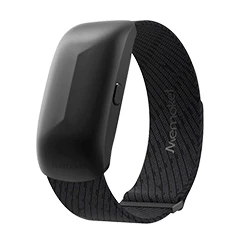
Product Introduction
- Definition: The Google Fitbit Edge is a premium, screen-based fitness tracker and health monitoring wearable device. It represents a new category within Google's portfolio, positioned between advanced smartwatches like the Pixel Watch and minimalist, screenless bands like the Fitbit Air.
- Core Value Proposition: The Fitbit Edge exists to provide advanced health and fitness tracking in an ultra-slim, comfortable, and durable design for 24/7 wear. Its primary value lies in combining state-of-the-art sensors (ECG, skin temperature, precision GPS) with Google's AI-powered Health Coach and Health Guardian features, all powered by a long-lasting battery, to deliver personalized, actionable wellness insights for an active lifestyle.
Main Features
- Advanced Health Guardian & AI Coaching: This feature uses continuous background monitoring and AI to track subtle health trends like blood pressure and insulin resistance patterns, providing proactive alerts and personalized guidance. It works by analyzing long-term biometric data from the device's sensors. Access requires a Google Health Premium subscription, which integrates with the Google Health app to deliver contextual insights and adaptive fitness plans.
- Precision GPS & Consolidated Fitness Tracking: The device features a next-generation GPS chipset and nano-molded aluminum housing for up to 40% improved route accuracy over prior Fitbit models. It works with an integrated altimeter and automatic workout recognition (for up to 100 activities) to provide a unified view of location, elevation, and effort across over 50 exercise modes with real-time, glanceable metrics.
- Modular, Repairable Design with Extended Battery: A key technical differentiator, the Fitbit Edge is Google's first repairable fitness tracker. It employs an internal modular architecture, with a user-replaceable battery designed to extend the device's lifespan. This supports its weekend-to-weekend battery claim of up to 7 days, achieved through hardware and software optimization, complemented by fast magnetic charging that provides a full day's power in approximately five minutes.
Problems Solved
- Pain Point: Users seeking comprehensive health data and smart coaching often must choose between bulky smartwatches with short battery life or simple bands lacking advanced features and a functional display.
- Target Audience: Fitness enthusiasts and health-conscious individuals who prioritize 24/7 wearability, detailed workout metrics, and proactive health monitoring without the bulk or daily charging of a full smartwatch. This includes runners, cyclists, HIIT athletes, and those managing wellness goals like sleep improvement or stress recovery.
- Use Cases: A runner can use the built-in precision GPS and pace guidance for outdoor training without a phone. An individual monitoring long-term wellness can utilize the Health Guardian trends for informed discussions with a doctor. Anyone can benefit from the automatic activity tracking that captures daily walks or gym sessions, ensuring all effort counts toward weekly goals.
Unique Advantages
Strengths & Limitations (Pros & Cons):
- Pros: Industry-leading 7-day battery life for a device with a bright display and GPS; unique repairable design focusing on battery replacement; integration of advanced health sensing (ECG, skin temperature) with AI-driven Google Health insights; sleek, lightweight aluminum build (45% lighter than Apple Watch Series 12); highly accurate GPS.
- Cons: Full potential of AI Health Coach and Health Guardian features requires a paid Google Health Premium subscription after the 3-month trial; advanced health metrics like ECG and skin temperature are not available in all countries; the water-repellent coating on special editions is not permanent and will degrade.
Key Alternatives & Differentiation:
- vs. Fitbit Charge 6: The Edge is a generational leap, offering a larger, brighter display, a more premium aluminum build, a repairable design, next-gen GPS, and direct access to the AI-powered Google Health Coach ecosystem. It sits at a higher price point ($179.99 vs. ~$159) for these advanced features.
- vs. Garmin Vivosmart 5: While both are fitness bands, the Edge differentiates with its vibrant touchscreen, deeper Google ecosystem integration (Maps, notifications), AI health insights, and skin temperature sensing. Garmin focuses more on pure fitness metrics and boasts longer battery life but with a simpler display.
- vs. Apple Watch SE: The Edge's primary advantage is battery life (7 days vs. 18 hours), making it ideal for sleep tracking and extended wear. It's also significantly lighter and slimmer. The Apple Watch SE offers a fuller smartwatch OS with third-party apps and calls but requires daily charging.
Frequently Asked Questions (FAQ)
- What is included with the Google Fitbit Edge purchase? The purchase includes the Fitbit Edge tracker, a charging cable, and a 3-month trial subscription to Google Health Premium, which is required for key features like the AI Health Coach and detailed Health Guardian analytics.
- How accurate is the GPS on the Fitbit Edge? Google claims up to 40% improved tracking accuracy over previous Fitbit tracker generations, thanks to a new GPS chipset and nano-molded aluminum housing design, allowing for precise route mapping without a connected phone.
- Is the Google Fitbit Edge waterproof? It has a 5 ATM water resistance rating (suitable for swimming) and an IP68 dust/water rating, but it is not considered permanently waterproof. The special edition's water-repellent coating will wear off over time.
- Can I replace the battery in the Fitbit Edge myself? Yes, a core innovation of the Fitbit Edge is its user-replaceable battery, made possible by its modular internal architecture. This is designed to extend the device's usable lifespan.
- What phones are compatible with the Google Fitbit Edge? It is compatible with most phones running Android 11+ or Apple iOS 16.4+. It requires the Google Health app, a Google Account, and an internet connection for full functionality.