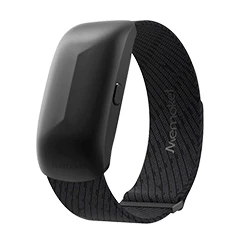
Product Introduction
Definition: Fort is a specialized, high-performance wearable device and health-tech platform categorized as an automated strength training tracker and physiological monitor. Unlike generic fitness trackers, Fort is engineered with a specific focus on resistance training biomechanics, utilizing a combination of Inertial Measurement Units (IMU) and photoplethysmogram (PPG) sensors to digitize weightlifting data without manual user input.
Core Value Proposition: Fort exists to bridge the data gap in resistance training for individuals focused on longevity and muscle health. While traditional wearables prioritize cardiovascular metrics (HR, VO2 Max), Fort provides a "strength-first" ecosystem. Its primary value lies in its ability to automatically detect exercises, count repetitions, and analyze set intensity (proximity to failure) in real-time. This eliminates the friction of manual logging while providing actionable, muscle-level insights that traditional heart-rate-based trackers cannot capture.
Main Features
Autonomous Exercise Recognition & Rep Counting: Using a high-precision 6-axis IMU consisting of an accelerometer and gyroscope, Fort identifies motion patterns to distinguish between over 50 different exercises, including barbell compounds, dumbbell movements, and cable accessories. The device utilizes edge-computing algorithms to count repetitions, track rep cadence, and measure bar speed/velocity, providing a granular view of every set performed.
Strength-Specific Intensity Metrics: Fort moves beyond simple heart rate monitoring by calculating "Proximity to Failure" and "Time Under Tension" (TUT). By analyzing rep velocity and movement deceleration, the system estimates how many repetitions were left in the tank (RIR - Reps in Reserve). This allows users to quantify strength-related fatigue and mechanical tension, which are the primary drivers of hypertrophy and metabolic health.
Holistic Longevity & Recovery Suite: In addition to its strength capabilities, Fort functions as a 24/7 health monitor. It features a PPG sensor for continuous heart rate tracking, HRV (Heart Rate Variability) analysis, and real-time stress detection. For recovery, the device tracks sleep architecture—categorizing Deep, Light, and REM stages—and calculates a daily recovery score to help users balance high-intensity training with physiological readiness.
Problems Solved
Pain Point: The Friction of Manual Data Entry: Most fitness apps require users to manually input every exercise, weight, and rep count, which interrupts the flow of a workout and often leads to incomplete data. Fort solves this through "Hands-Free Tracking," where the device handles all data logging through motion analysis.
Pain Point: Misleading Caloric and Fatigue Metrics: Traditional wearables often underestimate the systemic fatigue of a heavy strength session because they rely on heart rate, which may remain relatively low compared to the mechanical stress on the muscular and nervous systems. Fort provides "Muscle-Level Insights" that accurately reflect the intensity of resistance training.
Target Audience:
- Longevity Enthusiasts: Individuals prioritizing muscle mass maintenance as a key marker for healthy aging.
- Data-Driven Athletes: Powerlifters, bodybuilders, and CrossFit practitioners who require precise volume and intensity tracking.
- Biohackers: Users looking for a single device that integrates metabolic health (cardio/sleep) with mechanical health (strength).
Use Cases:
- Hypertrophy Optimization: Using Time Under Tension and velocity tracking to ensure sets are within the optimal growth range.
- Injury Prevention: Monitoring form breakdowns and rep speed to identify when fatigue is compromising safety.
- Comprehensive Health Monitoring: Replacing a standard smartwatch with a device that captures both the morning gym session and overnight recovery metrics.
Unique Advantages
Differentiation: Most competitors (e.g., Apple Watch, Whoop, Oura) are "cardio-centric" or "sleep-centric." They treat strength training as a generic activity block. Fort differentiates itself by providing a specific "Leg Day" or "Upper Body" breakdown, showing per-muscle volume and intensity scores that other devices lack.
Key Innovation: The core innovation is the integration of biomechanical motion data with physiological sensor data to create a "Strength Score." By combining bar speed (IMU data) with heart rate response (PPG data), Fort provides a multi-dimensional view of physical exertion that is significantly more accurate for weightlifters than heart-rate-only models.
Frequently Asked Questions (FAQ)
How does Fort track strength training without manual input? Fort utilizes a combination of an accelerometer and gyroscope (IMU) to recognize the specific "signature" of different movements. When you perform a bench press or a squat, the device matches your wrist's path of motion and velocity against its database of over 50 exercises to automatically log the set, rep count, and rest interval.
Does Fort track cardio and sleep like other fitness trackers? Yes. While Fort is built for strength, it is a comprehensive wearable. It tracks heart rate zones, estimated VO2 max, and all-day activity. At night, it monitors sleep stages (REM, Deep, Light) and overnight Heart Rate Variability (HRV) to provide a complete picture of your recovery and cardiovascular health.
What is the battery life and device compatibility? Fort features a 7-day battery life on a single charge, even with continuous heart rate and motion monitoring. The device connects via Bluetooth Low Energy (BLE) to a companion app available on both iOS and Android platforms.
Can Fort estimate how close I am to muscle failure? Yes. By measuring the velocity of your repetitions (bar speed), Fort can detect the involuntary slowing of a movement that occurs as muscles fatigue. It uses this data to estimate your proximity to failure, helping you ensure you are training with enough intensity to see results without overtraining.