Product Introduction
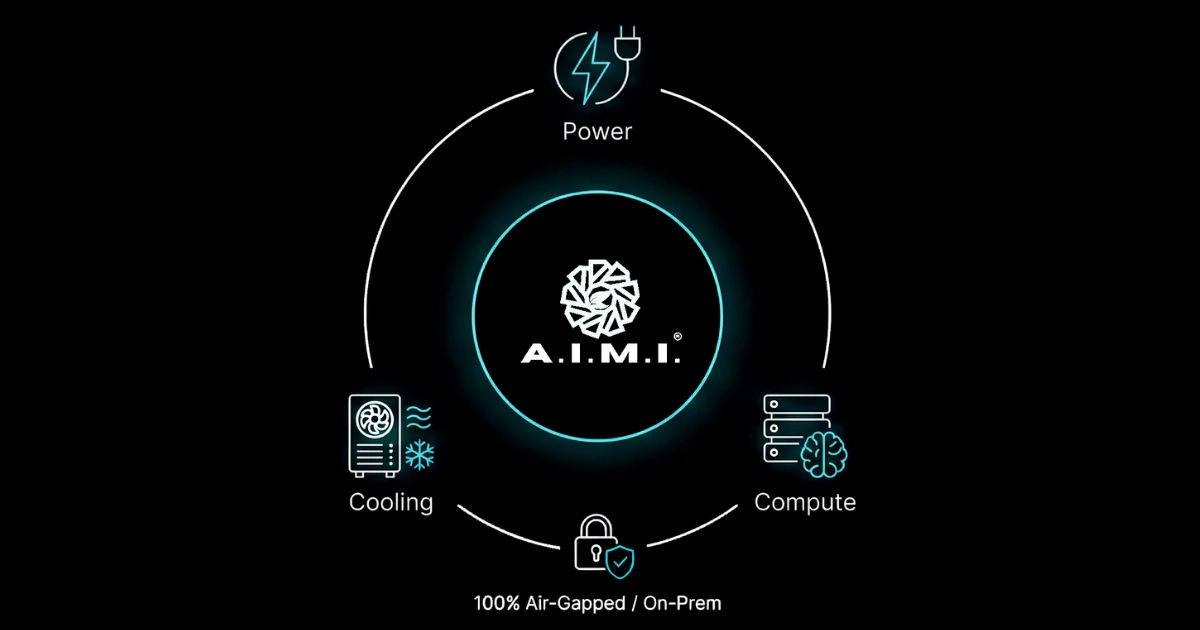
Definition: FLUIX AI is an enterprise-grade, on-premise autonomous intelligence platform (A.I.M.I.) specifically engineered for Data Center Infrastructure Management (DCIM) and facility optimization. It functions as a layer of "on-premise AI agents" that interact directly with physical infrastructure to automate environmental controls and power distribution.
Core Value Proposition: The primary objective of FLUIX AI is to decouple compute growth from energy consumption. By transforming traditional electrical and cooling infrastructure into a "grid-aware" system, it enables data center operators to realize up to 40% more compute capacity within their existing power envelope. The system seeks to eliminate manual thermal management and resource over-provisioning through real-time, autonomous adjustments.
Main Features
A.I.M.I. (Autonomous Intelligence for Mission-critical Infrastructure): This is the core proprietary engine that drives dynamic optimizations. Unlike traditional Rule-Based Logic (RBL), A.I.M.I. utilizes self-learning algorithms to establish dynamic set points and perform real-time load balancing. It continuously analyzes the thermodynamic environment of the server room, autonomously finding the most efficient method to maintain ASHRAE standards or custom thermal envelopes across fragmented systems.
Agnostic Integration Layer: FLUIX addresses the industry-wide challenge of "vendor lock-in" and fragmented hardware. Its integration layer is hardware-agnostic, meaning it can interface with disparate HVAC units, lighting systems, water cooling loops, and server-level telemetry regardless of the manufacturer. This creates a unified data fabric where previously isolated systems "speak" and work in orchestration.
Predictive Capacity Modeling and Bottleneck Detection: The platform transforms live telemetry into actionable capacity insights. By modeling potential environmental changes and simulating IT load deployments, the AI predicts where additional compute can be safely installed. This reduces the need for manual airflow analysis and thermal mapping, allowing for faster infrastructure scaling with minimized risk of "hot spots" or equipment failure.
Problems Solved
Pain Point: Inefficient Cooling and High PUE (Power Usage Effectiveness): Traditional data centers often over-cool facilities to avoid downtime, leading to massive energy waste. FLUIX reduces HVAC energy consumption by up to 65% by applying precision AI control to cooling cycles, ensuring energy is only expended when and where it is thermally required.
Target Audience:
- Data Center Operators and Facility Managers: Seeking to reduce OPEX and automate 24/7 environmental monitoring.
- Sustainability and ESG Officers: Tasked with meeting net-zero carbon aspirations and reducing the environmental footprint of energy-intensive server rooms.
- Infrastructure Architects: Responsible for maximizing IT load density in space-constrained or power-constrained environments.
- Mission-Critical Agencies: Including defense (e.g., Space Force) and utility providers (e.g., TVA) requiring high-availability autonomous systems.
- Use Cases:
- Legacy Data Center Retrofitting: Updating fragmented, older facilities with modern AI control without replacing expensive physical HVAC hardware.
- On-Orbit and Edge Computing: Managing thermal and power constraints on orbital platforms or remote stations where manual intervention is impossible.
- Grid-Aware Power Management: Participating in demand-response programs by turning electrical infrastructure into a system that can shed or shift load based on grid signals.
Unique Advantages
Differentiation: Most DCIM tools are reactive and diagnostic—they tell you what is wrong. FLUIX AI is proactive and autonomous—it fixes the issue in real-time. By moving from "human-in-the-loop" to "human-on-the-loop," the platform eliminates the latency and error-prone nature of manual facility adjustments.
Key Innovation: On-Premise AI Deployment: Unlike cloud-based AI solutions that introduce latency and security vulnerabilities, FLUIX operates on-premise. This ensures that mission-critical data never leaves the facility and that the AI agents can respond to hardware fluctuations in milliseconds, which is vital for preventing thermal runaway in high-density compute environments.
Frequently Asked Questions (FAQ)
How does FLUIX AI improve data center energy efficiency? FLUIX AI utilizes its A.I.M.I. engine to autonomously control HVAC and power systems. By using dynamic set point control and real-time load balancing, it eliminates over-cooling and optimizes airflow, which has been shown to reduce HVAC-specific energy consumption by up to 65%.
Can FLUIX AI increase the compute capacity of an existing data center? Yes. By optimizing the "thermal overhead" and reclaiming energy wasted on inefficient cooling, FLUIX allows operators to deploy up to 40% more IT load (servers/compute) using the same amount of total facility power.
Is FLUIX AI compatible with older, non-smart infrastructure? FLUIX features an agnostic integration layer specifically designed to connect fragmented systems. It can bridge the gap between legacy HVAC, water cooling, and lighting systems, allowing them to function as a modern, unified, and grid-aware ecosystem.