Product Introduction
Definition: Art House is a specialized Web-based Augmented Reality (WebAR) platform and spatial media engine designed for enterprise-level immersive marketing. It functions as an end-to-end ecosystem that allows brands to deploy high-fidelity 3D holograms and interactive digital layers directly onto physical assets using only a mobile browser.
Core Value Proposition: Art House exists to eliminate the friction of traditional AR by removing the requirement for dedicated app installations. By utilizing "Invisible Interfaces" and "AR Codes," the platform enables brands to convert static advertisements, product packaging, and retail environments into dynamic, shareable spatial experiences. Its primary value lies in increasing engagement rates and dwell time through realistic holograms and AI-integrated spatial computing.
Main Features
Backend Spatial Engine & Scene Editor: The core technical infrastructure consists of a high-performance spatial media engine capable of hosting and delivering complex 3D assets with low latency. The Scene Editor provides a professional-grade environment for creators to compose interactions between digital objects and their physical surroundings. This includes defining surface mapping parameters, anchor points, and lighting cues to ensure holograms appear grounded and realistic within the user's environment.
App-less Invisible Interface (WebAR): Art House leverages native mobile browser capabilities to bypass the "app barrier." By using AR Codes or AR Links, the platform triggers the device’s native camera and spatial sensors (gyroscope, accelerometer) via the browser. This allows for instantaneous entry into immersive scenes, significantly reducing the drop-off rate associated with downloading third-party software.
Intelligent Objects (AI-AR Integration): A standout technical feature is the fusion of Artificial Intelligence with Augmented Reality. Intelligent Objects act as the "mind" to the "body" of the AR experience. This feature unifies brand identity with data-driven intelligence, allowing 3D objects to interact contextually with users, answer queries via natural language processing, and provide personalized experiences based on real-time data inputs.
Viral Amplification & Engagement Tools: The frontend includes integrated "Share" and "Record" buttons, custom Call-to-Action (CTA) overlays, and lead-capture form fields. These tools are designed to transform passive viewing into active participation, allowing users to capture their spatial interactions and distribute them across social media platforms, thereby increasing organic brand reach.
Problems Solved
Pain Point: User Friction and App Fatigue: Traditional AR marketing often requires users to download a specific app, which serves as a major barrier to entry. Art House solves this by using WebAR technology to deliver experiences directly through the native camera and browser.
Target Audience:
- Marketing Managers & CMOs: Seeking to modernize traditional OOH (Out-of-Home) advertising and increase ROI on physical assets.
- Creative Agencies: Looking for a scalable platform to build and deploy high-fidelity spatial content for global brands.
- Retail & Packaging Designers: Aiming to add a digital layer of information, storytelling, or instructions to physical product containers.
- Event Producers: Requiring interactive elements for signage, trophies, or environmental installations.
- Use Cases:
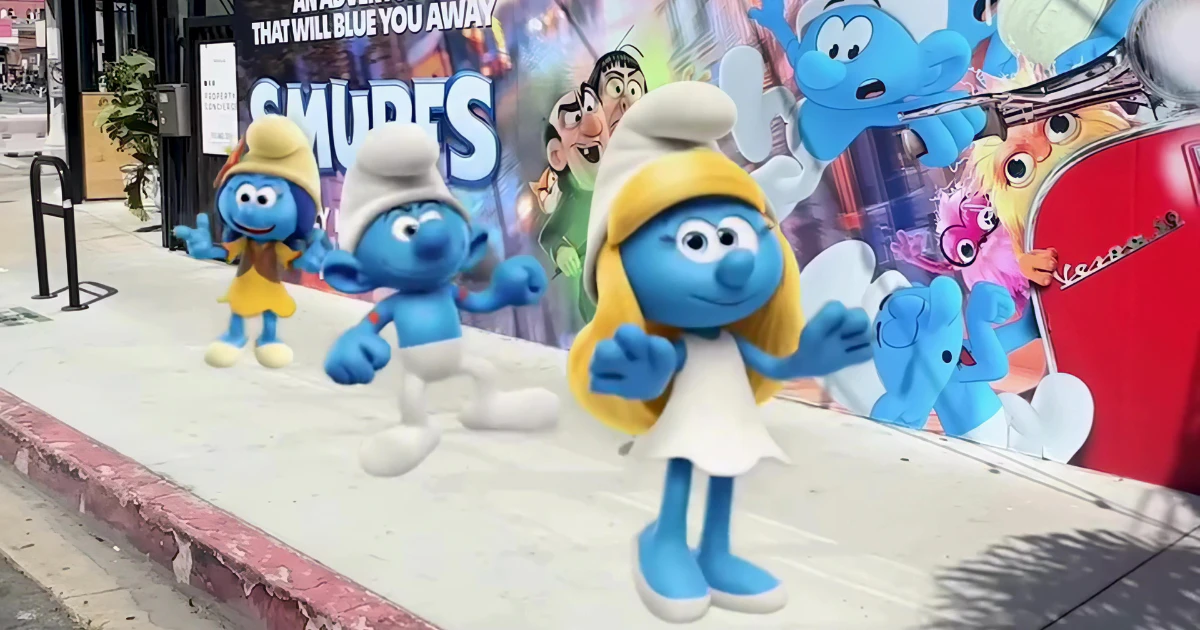
- Augmented Billboards: Transforming high-traffic signage (like the Gucci or Delta examples) into 3D spectacles that "break" the frame of the billboard.
- Smart Packaging: Using Kellogg’s Rice Krispies or similar CPG brands to display nutritional info, games, or brand stories on the box.
- Hospitality Concierge: 1 Hotel uses the platform for "Smart Concierge" services, where digital layers provide guests with interactive maps or amenity details via signage.
- Interactive Murals: Artists use the "Growing Mural" feature to animate static street art, turning urban environments into digital galleries.
Unique Advantages
Differentiation: Unlike social media AR filters (Instagram/Snapchat) that are confined to specific social ecosystems, Art House is platform-agnostic. It provides superior visual fidelity and more robust backend analytics compared to standard browser-based AR, specifically tailored for professional "realistic holograms" rather than stylized filters.
Key Innovation: The Spatial Engine Logic: The specific innovation lies in the platform's ability to anchor complex, high-poly 3D models to specific physical coordinates or image targets (like a postcard or a vinyl wrap) with high stability. By combining this with "Intelligent Objects," Art House moves AR from a visual gimmick to a functional utility that integrates AI-driven brand intelligence.
Frequently Asked Questions (FAQ)
Does Art House require users to download an app? No. Art House utilizes WebAR technology, which allows users to access interactive holograms and spatial scenes directly through their mobile browser (Safari, Chrome, etc.) by scanning a QR code or clicking a link.
What industries can benefit most from Web-based AR? Art House is optimized for Advertising, Retail, Real Estate, Hospitality, and Events. Any industry that relies on physical media—such as packaging, signage, or billboards—can use the platform to add a digital, interactive layer to their assets.
What are "Intelligent Objects" in the context of Art House? Intelligent Objects are 3D AR assets integrated with AI. While standard AR provides a visual overlay, Intelligent Objects allow for contextual interactions, personalized user journeys, and data-driven responses, acting as a bridge between brand identity and brand intelligence.
Can Art House assist with the creation of 3D content? Yes. Through "Art House Studio," the company offers end-to-end services from ideation and 3D modeling to implementation, ensuring brands without in-house spatial design teams can still deploy high-quality AR experiences.