Product Introduction
Definition: DeepXL Corp is an enterprise-grade Forensic AI fraud detection platform designed to identify manipulated financial documents, identity credentials, and photographic evidence. Technically categorized as an Automated Document Forensics and Identity Verification (IDV) solution, DeepXL utilizes computer vision and machine learning to detect pixel-level tampering, synthetic fraud, and generative AI artifacts in real-time.
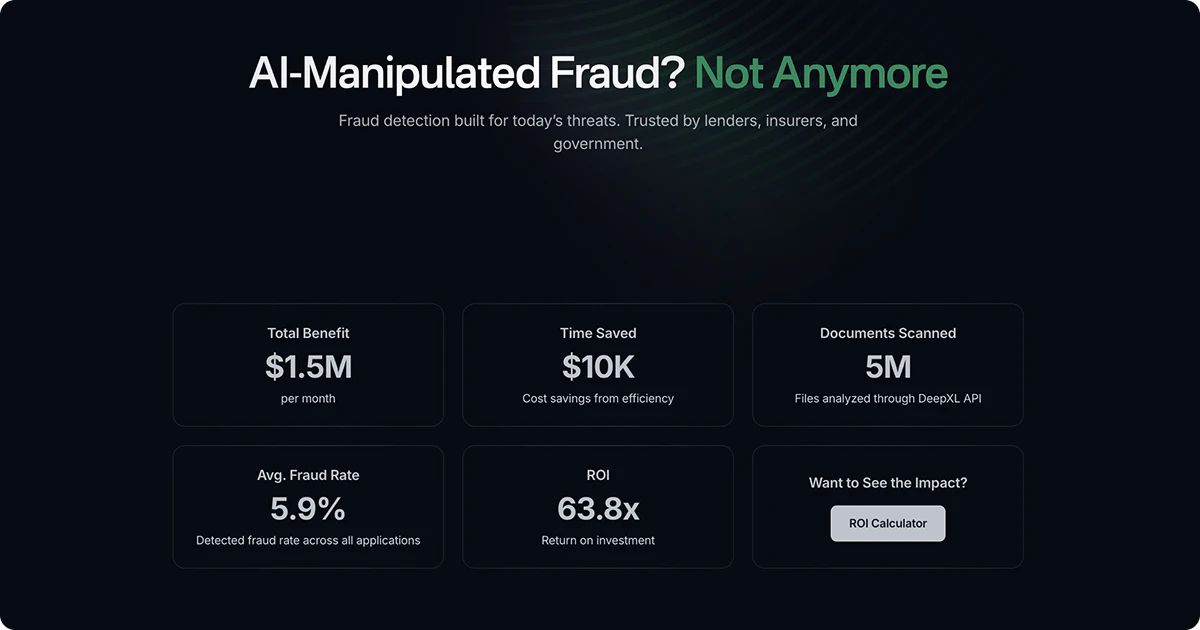
Core Value Proposition: DeepXL exists to mitigate the rising threat of AI-powered fraud in highly regulated sectors such as fintech, insurance, and government. By providing forensic-level analysis of digital files, the platform protects organizations from synthetic identity fraud, fraudulent loan applications, and doctored insurance claims, delivering an average ROI of 49.3x through reduced fraud losses and automated manual review workflows.
Main Features
Forensic Document Analysis: DeepXL employs advanced computer vision algorithms to scan financial records, including paystubs, bank statements, tax forms, and contracts. It operates by analyzing document metadata, font inconsistencies, alignment anomalies, and structural layers to expose tampering invisible to the human eye. The system detects "white-out" edits, digital overlays, and font substitutions that indicate financial misrepresentation.
Forensic ID-Check and Synthetic Identity Detection: This feature provides forensic-level verification for passports, driver’s licenses, and national ID cards. Beyond simple OCR, DeepXL analyzes the security features and digital integrity of the ID image to identify synthetic identities and altered credentials. It cross-references forensic signals to ensure the document has not been digitally manipulated or reconstructed using AI-generated components.
Object and Claim Photo Forensic Analysis: Specifically built for the insurance sector, this module analyzes photos of physical objects—such as car accidents, damaged electronics, or property claims. The technology detects digital edits, the use of recycled stock imagery, and deepfake/AI-generated visuals. By evaluating file origins and pixel consistency, it prevents "recycled fraud" where the same damage photo is submitted across multiple claims.
DeepIQ Network Intelligence: DeepXL leverages a proprietary network to identify fraud rings operating across different providers. It utilizes global intelligence to match known fraud tactics, detect duplicate file submissions across its ecosystem, and scan the web for reused content. This collective intelligence layer strengthens individual fraud defenses by identifying patterns of systemic attacks.
Scoring Model and Audit-Ready Findings: Every analyzed file is processed through a multi-factor forensic engine that returns a classification of Trusted, Warning, or High Risk. Each finding is accompanied by a confidence score and "Audit-Ready" evidence, including heatmaps that highlight exactly where a document was tampered with. This transparency ensures that compliance and fraud teams have the necessary documentation for regulatory reporting and legal evidence.
Smart Parsing and Autofill: Integrating with existing workflows via API, DeepXL includes intelligent data extraction (OCR). It automatically extracts data from verified IDs and documents to prefill applications, reducing friction in the user onboarding process while simultaneously performing fraud checks in the background.
Problems Solved
- Pain Point: AI-Generated and Highly Sophisticated Fraud: Traditional fraud detection often misses "perfect" fakes created by generative AI. DeepXL addresses this by looking at forensic signals (metadata, noise patterns, and structural anomalies) rather than just visual inspection.
- Target Audience:
- Lending Risk Officers: Who need to verify applicant income and identity without slowing down the approval process.
- Insurance Claims Adjusters: Who require automated tools to flag fraudulent damage photos and receipts.
- Compliance and AML Officers: Who need audit-ready evidence for government and regulatory verification.
- Fintech Product Managers: Looking to integrate seamless, secure IDV and document parsing via API.
- Use Cases:
- Loan Origination: Detecting manipulated paystubs and bank statements during the mortgage or personal loan application process.
- Insurance Claims Validation: Identifying doctored accident photos or AI-generated evidence in high-volume claim environments.
- Government Benefit Verification: Authenticating identity documents for social services or licensing to prevent large-scale identity theft.
Unique Advantages
- Differentiation: Unlike standard IDV tools that only check if an ID "looks" real, DeepXL performs a forensic deep-dive into the file structure itself. It moves beyond simple database matching to analyze the actual integrity of the digital asset, making it effective against "zero-day" fraud tactics that haven't been recorded in databases yet.
- Key Innovation: The "Audit-Ready" transparency model is a significant departure from "black-box" AI. DeepXL provides visual heatmaps and detailed reasoning for every flag, allowing human reviewers to see the exact point of manipulation, which is critical for legal disputes and internal audits.
- Efficiency at Scale: With the ability to scan documents in milliseconds and an API-first architecture, DeepXL handles high-volume environments (scanning over 8M+ files) while maintaining a high detection rate (6.1% average fraud detection) and saving organizations significant capital—averaging $1.5M in monthly benefits for enterprise clients.
Frequently Asked Questions (FAQ)
How does DeepXL detect AI-generated fake documents and photos? DeepXL uses forensic image analysis to identify "digital fingerprints" left by generative AI and photo editing software. It examines pixel-level inconsistencies, metadata discrepancies, and structural anomalies that are inherent in AI-generated or doctored images but absent in authentic, captured-on-device photos.
Can DeepXL integrate with existing loan origination or claims management systems? Yes, DeepXL is designed for seamless integration via a robust API. It can be embedded directly into existing workflows for lending, insurance, and government services, allowing for real-time scanning, data extraction (autofill), and fraud scoring without disrupting the user experience.
What makes DeepXL’s fraud evidence "audit-ready"? DeepXL provides more than just a "pass/fail" score. It generates detailed reports including heatmaps that visually isolate tampered areas and provides a forensic rationale for every warning. This transparency allows organizations to meet strict compliance and regulatory requirements by providing clear, defensible evidence of fraud.
What is the DeepIQ Network and how does it prevent fraud rings? The DeepIQ Network is a cross-platform intelligence layer that tracks fraud patterns and reused assets across the DeepXL ecosystem. By identifying when a single fraudulent document or photo is used across multiple different institutions, DeepXL can stop coordinated fraud rings and "recycled" claims attacks that individual organizations might miss in isolation.