
Product Introduction
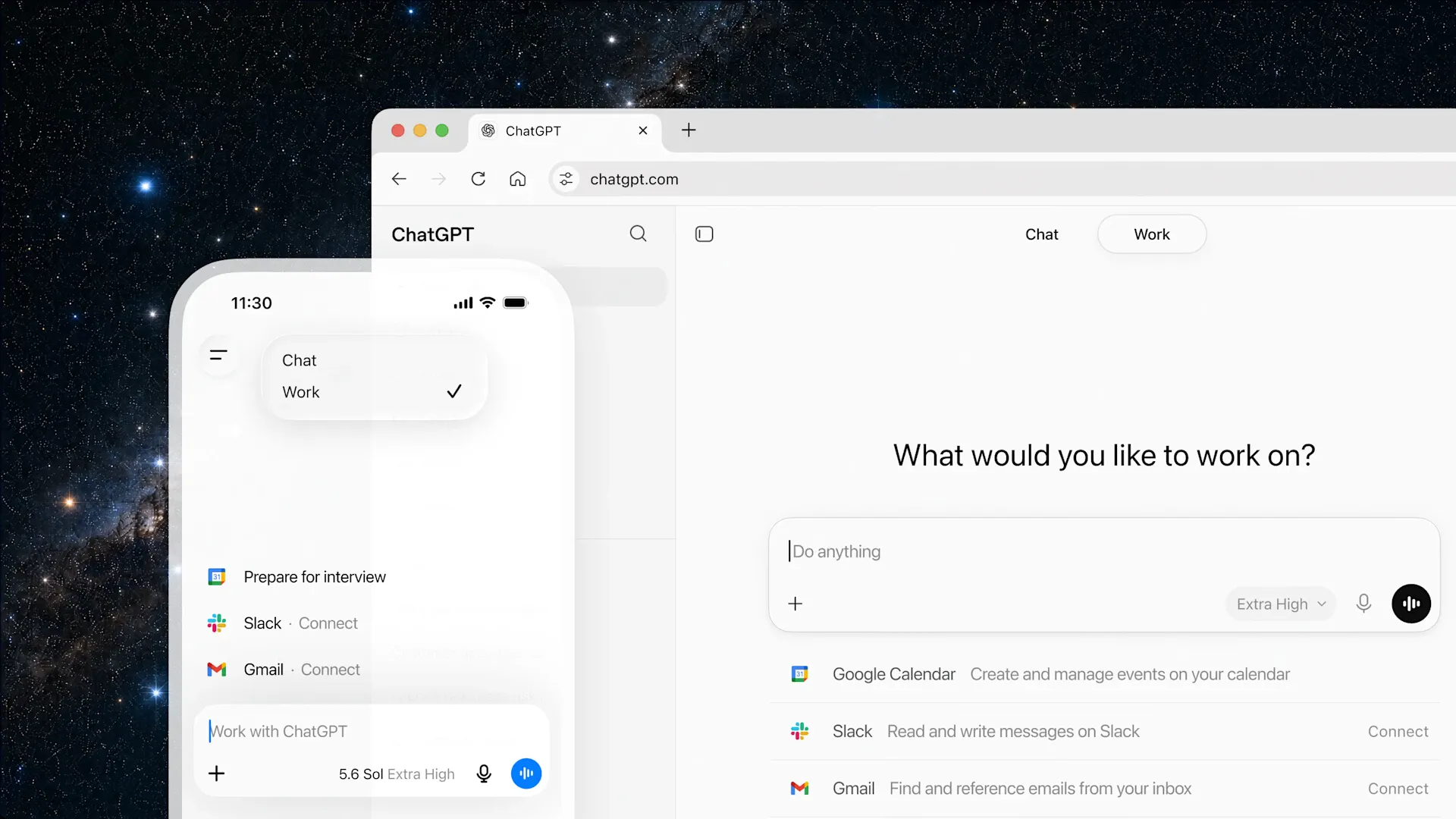
- Definition: ChatGPT Work is an advanced, autonomous AI agent designed for enterprise and professional workflows. Technically, it falls into the category of multi-modal, multi-step reasoning agents capable of executing complex, goal-oriented tasks across software ecosystems.
- Core Value Proposition: It exists to automate and orchestrate high-level cognitive work, transforming a user's stated objective into a completed outcome by taking direct action within applications and documents, thereby eliminating manual task-switching and significantly boosting productivity for ambitious projects.
Main Features
- Cross-Application Task Automation: The agent can navigate and operate within a user's authorized software environment. This involves using APIs, browser automation, or dedicated integrations to perform actions like retrieving data from a CRM, processing it in a spreadsheet, and summarizing it in a presentation deck. It works by interpreting natural language goals, breaking them into sub-tasks, and executing the necessary steps across different platforms without constant user supervision.
- Long-Running Project Context: Unlike standard chatbots with limited memory, ChatGPT Work can maintain context and state over extended periods—potentially hours. This allows it to work on lengthy projects such as code refactoring, market research compilation, or multi-stage data analysis, remembering previous steps, decisions, and intermediate results to ensure continuity and coherence in the final deliverable.
- File and Document Intelligence: The agent possesses deep understanding and manipulation capabilities for various file formats (e.g., PDFs, DOCX, code files, spreadsheets). It can extract specific information, synthesize data from multiple documents, rewrite sections, generate reports, and create new files based on the content and context of existing ones, acting as an active participant in document-centric workflows.
Problems Solved
- Pain Point: Fragmented workflows and constant context-switching between disparate tools (Slack, Google Sheets, Figma, JIRA, etc.) which destroys deep work focus and creates administrative overhead.
- Target Audience: Knowledge workers and specialized professionals including Software Engineers & DevOps teams, Data Analysts & Scientists, Product Managers, Content Strategists & Marketing Operations Managers, and Executive Assistants managing complex schedules and reports.
- Use Cases: Automating the weekly aggregation of sales metrics from HubSpot and Salesforce into a stakeholder deck; conducting a full competitive analysis by researching websites, parsing PDF reports, and generating a SWOT matrix; refactoring a legacy code module by analyzing the codebase, writing updated functions, and running pre-configured tests; managing a product launch by coordinating checklist items across project management, design, and communication tools.
Unique Advantages
- Differentiation: Compared to traditional workflow automation tools (Zapier, Make) which require explicit "if-this-then-that" rule configuration, ChatGPT Work uses natural language understanding to handle unstructured, variable tasks. Versus other AI assistants, its key differentiator is the authority to take direct action (not just suggest actions) and persist on a single problem for a long duration.
- Key Innovation: The integration of reasoning autonomy with tool-use at scale. The core innovation is an AI architecture that can formulate a multi-step plan, select the correct tools (apps) for each step, execute them reliably, handle errors or unexpected outputs, and persist towards a final goal—all guided by high-level human instruction.
Frequently Asked Questions (FAQ)
- How does ChatGPT Work handle data security and privacy when accessing my apps? ChatGPT Work for enterprise is designed with security-first principles, operating under strict access controls, encryption, and compliance standards (like SOC 2). It typically uses OAuth tokens with defined permissions and does not store sensitive user data from connected apps beyond the session required to complete the task.
- What applications and software tools can ChatGPT Work integrate with? While the full catalog depends on OpenAI's development roadmap, it is built to integrate with a wide range of common workplace SaaS tools such as Google Workspace, Microsoft 365, Salesforce, GitHub, Jira, Notion, and Slack, primarily through their public APIs and sanctioned authentication methods.
- Can ChatGPT Work write and execute code as part of its tasks? Yes, a primary use case for ChatGPT Work is technical. It can write code in various programming languages, execute it within secure, sandboxed environments for testing, debug errors, and integrate the results into larger workflows, making it a powerful tool for developers and data professionals.
- How is ChatGPT Work different from using the standard ChatGPT Plus subscription? The standard ChatGPT is a conversational interface for information and content generation. ChatGPT Work is an agentic platform that performs actions on your behalf. Think of the difference between a consultant who gives advice (ChatGPT Plus) and a dedicated employee who completes the entire project from start to finish (ChatGPT Work).


