
Product Introduction
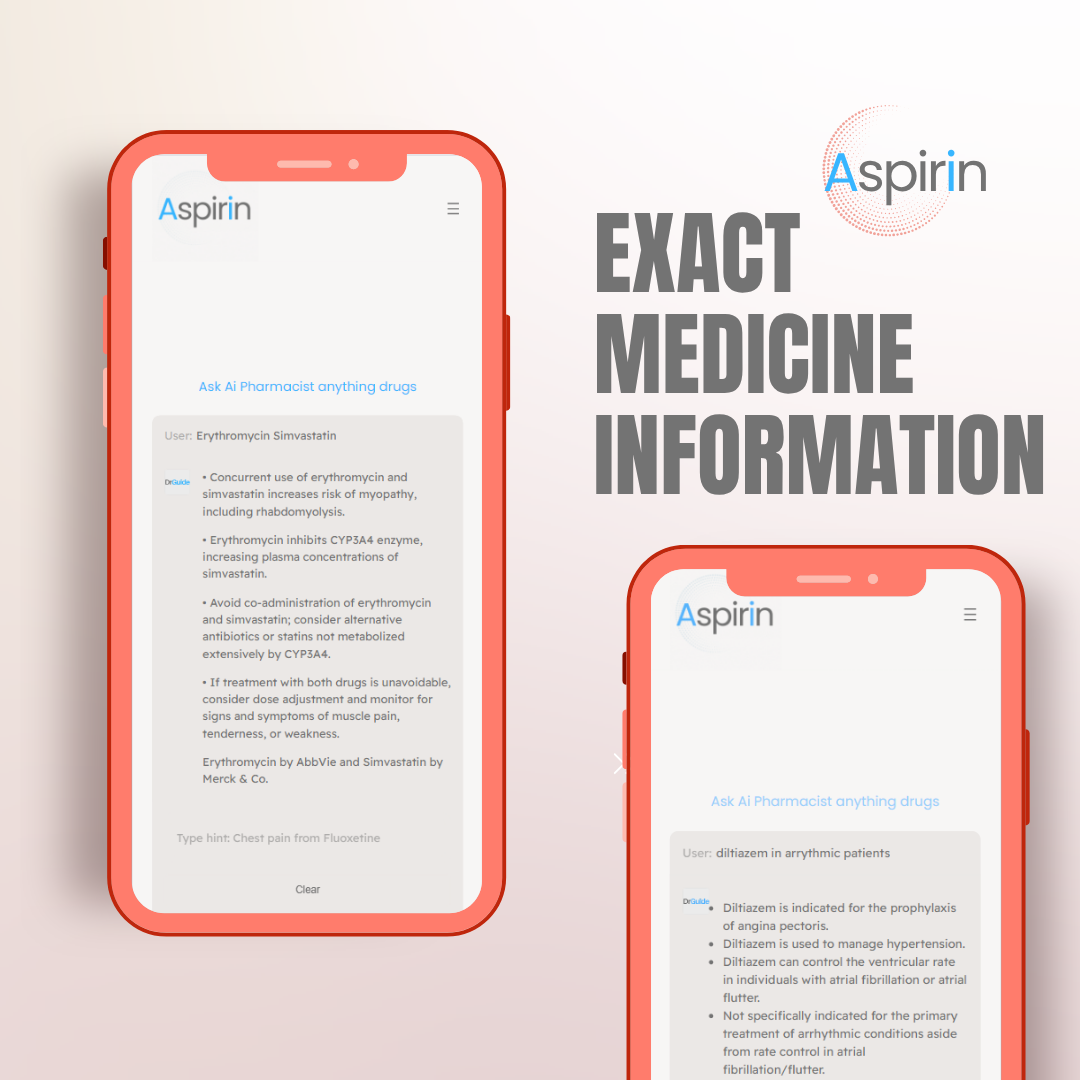
- Aspirin AI is an AI-powered medical reference tool designed to provide instant, precise drug and medicine information for healthcare professionals, patients, and students. It delivers structured data across 20+ categories, including indications, dosing, interactions, and safety protocols, through a streamlined two-word search interface.
- The core value of Aspirin AI lies in its ability to reduce time spent on manual research while ensuring accuracy and compliance with modern medical standards. It bridges the gap between clinical practice and up-to-date pharmacological data, enabling safer decision-making for both professionals and patients.
Main Features
- Aspirin AI offers real-time access to comprehensive drug profiles, covering critical categories such as Class, Indications, Dose, Side Effects, Interactions, Warnings, Use in Pregnancy, Hepatic/Renal Adjustments, Brand Names, and Monitoring Parameters. Each entry is validated against clinical guidelines and updated dynamically.
- The platform includes specialized modules for healthcare workflows, such as Patient Counselling guidance, Cost comparisons, and Palliative Care protocols, tailored for doctors, nurses, and pharmacists. It supports Continuing Professional Development (CPD) with long-form educational content for medical students.
- A dual-mode interface optimizes usability: a two-second response system for urgent queries and an advanced search for detailed research. The Android app is live, with iOS compatibility planned, and all data is encrypted to meet healthcare privacy standards.
Problems Solved
- Aspirin AI eliminates the inefficiency of cross-referencing multiple drug databases or textbooks, which delays clinical decisions and increases error risks. It consolidates fragmented information into a single, instantly accessible source.
- The tool serves healthcare professionals (doctors, nurses, pharmacists), medical students, and patients seeking reliable self-education. It is particularly valuable in fast-paced environments like hospitals, pharmacies, and remote consultations.
- Typical scenarios include verifying drug interactions during prescriptions, counseling patients on side effects, adjusting doses for renal/hepatic impairment, and academic research for case studies or exams.
Unique Advantages
- Unlike general medical apps, Aspirin AI is purpose-built for clinical precision, with data structured explicitly for therapeutic decision-making rather than general health advice. It avoids algorithmic recommendations, relying instead on peer-reviewed medical sources.
- The two-word search engine uses NLP trained on medical terminology to parse abbreviated or incomplete queries, returning accurate results without requiring exact spelling or phrasing. This reduces input friction during urgent situations.
- Competitive strengths include its validation by healthcare providers, offline functionality for low-connectivity settings, and compliance with GDPR and HIPAA through zero third-party data sharing. It also provides cost comparisons and brand alternatives unavailable in standard drug databases.
Frequently Asked Questions (FAQ)
- How does Aspirin AI ensure the accuracy of its drug information? Aspirin AI sources data from peer-reviewed clinical guidelines, regulatory agencies (e.g., FDA, EMA), and hospital protocols, with updates reviewed by a panel of licensed pharmacists and physicians.
- Can Aspirin AI be used offline? The Android app supports offline access to previously searched drug profiles, ensuring functionality in areas with limited internet connectivity, such as rural clinics or emergency wards.
- What distinguishes Aspirin AI from other medical reference apps? Aspirin AI combines patient-facing simplicity with professional-grade depth, offering features like Pregnancy Safety Ratings, Palliative Care Adjustments, and real-time interaction checkers not found in consumer-focused apps.
- Is patient data stored or shared when using Aspirin AI? No patient data is collected, stored, or shared. The app operates without requiring personal health information, aligning with strict medical privacy regulations.
- When will the iOS version be released? The iOS version is in active development and scheduled for launch in Q4 2024, following beta testing with partner healthcare institutions.


