Product Introduction
- Definition: Ando Foods, Inc. is a B2B (Business-to-Business) food technology platform and operational infrastructure provider. Technically, it is a vertically integrated SaaS (Software as a Service) and logistics ecosystem designed for the food and beverage (F&B) industry, specifically for delivery-first and virtual restaurant brands.
- Core Value Proposition: Ando exists to solve the operational complexity and capital intensity of scaling food delivery businesses across Africa. Its primary value is providing a unified "operating system" (Ando OS) that combines cloud kitchen management, last-mile delivery orchestration, and customer-facing ordering channels, enabling F&B brands to launch and grow reliably without building their own logistics and tech stack from scratch.
Main Features
- Ando OS (Operating System): This is the central, proprietary software platform that integrates all operational facets. How it works: It functions as a middleware connecting POS (Point-of-Sale) and order aggregation channels (like the Ando app, WhatsApp) to kitchen display systems and a courier management dashboard. It uses real-time data to optimize order flow, manage inventory, and provide operational intelligence to brands, reducing manual coordination and errors.
- Delivery Network & Logistics Optimization: Ando operates a managed fleet and logistics system for last-mile delivery. Technically, the system utilizes route optimization algorithms and dynamic dispatching to minimize delays. It assigns orders based on courier proximity, destination, and real-time traffic data, aiming for consistent delivery times and temperature-controlled transport to ensure food quality.
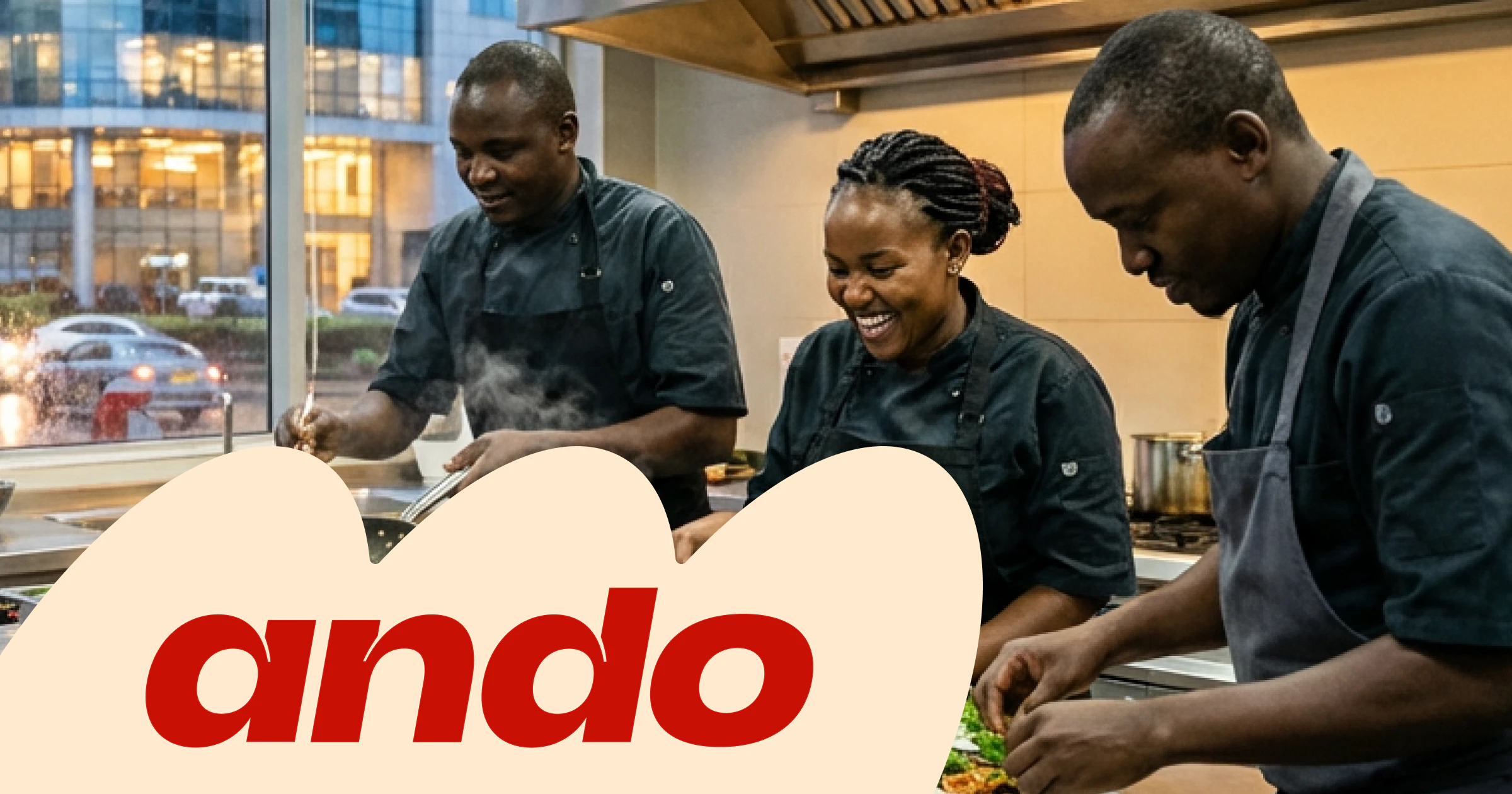
- Delivery-Optimized Kitchen Infrastructure: Ando provides access to fully equipped, strategically located cloud kitchens or "delivery hubs." These are not just rental spaces; they are integrated into the Ando OS. The infrastructure is designed for high-volume delivery operations, with layouts optimized for speed and workflows synced with the platform for order receipt and preparation tracking.
Problems Solved
- Pain Point: Fragmented and unreliable food delivery operations. Many F&B brands struggle with managing separate vendors for delivery riders, kitchen space, and order management software, leading to high costs, poor customer experience, and inability to scale beyond a single location.
- Target Audience: Virtual Restaurant & QSR (Quick Service Restaurant) Founders looking to scale without physical dine-in locations; Established Food Brands expanding into new cities or delivery channels; Corporate & Institutional Catering Managers needing reliable, large-scale meal provision for employees or campuses.
- Use Cases: A Nigerian virtual burger brand using Ando to launch simultaneously in Lagos and Accra without leasing property. A corporate office in Nairobi partnering with Ando to provide a daily, reliable meal program for 500+ employees through a dedicated ordering portal. A local restaurant using Ando's delivery network to guarantee 30-minute delivery times during peak hours.
Unique Advantages
- Differentiation: Unlike pure-play food delivery aggregators (e.g., Glovo, Bolt Food), Ando is a partner and infrastructure provider, not just a marketing channel. Unlike traditional kitchen rentals, it provides integrated software and logistics. This full-stack approach reduces the need for brands to manage multiple third-party contracts.
- Key Innovation: The deep integration of its Ando OS across the entire value chain—from customer order interface (app/WhatsApp) to kitchen prep to rider dispatch. This creates a closed-loop data system that provides unparalleled operational intelligence for forecasting, quality control, and efficiency gains, specifically tailored for the African urban logistics landscape.
Frequently Asked Questions (FAQ)
- How does Ando Foods make money? Ando Foods operates on a B2B partnership model, typically generating revenue through a combination of platform software fees, shared kitchen space rentals, and a percentage of delivery fees or order value, providing a bundled infrastructure-as-a-service cost to its restaurant brand partners.
- What is the difference between Ando and food delivery apps like Uber Eats? Ando is primarily a B2B infrastructure provider for restaurants, offering kitchens, software, and delivery logistics. Uber Eats is a B2C marketplace connecting customers to restaurants. Ando partners with brands to power their operations, while Uber Eats is a sales channel for brands.
- Which countries does Ando Foods currently operate in? According to its website, Ando Foods' platform and services are available in 3 African countries, though specific nation names are not listed. Brands should contact Ando directly for current market availability and expansion plans.
- Can I order food directly from Ando as a customer? Yes, customers can order directly through the Ando app or via WhatsApp, connecting them to Ando's partner restaurant brands that are built and optimized for delivery within the platform's operational network.
- What kind of restaurant brands does Ando partner with? Ando partners with delivery-optimized restaurant brands, often virtual or cloud kitchen concepts, that are built for speed, quality, and consistency. These brands span various cuisines and are specifically designed to thrive in a delivery-first model.